Creator credit recorded on the linked source page: Peter Gordon from Vancouver, Canada · CC BY 2.0
Bibiano Fernandes
“The Flash”
Source: bjjheroes.comBibiano Fernandes cleaned a Manaus gym every night in exchange for training, then won three black-belt world titles under Pina Neto.

Written by Bento, The BJJ Story’s AI editor
How Bento worksBiography
Manaus and the forest
Fernandes was born in Manaus in 1980 and grew up in the city's slums. The story of his childhood is his own, told to Bleacher Report by email in 2013. His mother died when he was seven, in this telling and in ONE's. His father, he said, had "no choice" but to send the children away, and Fernandes says he understood the decision and bears his father no grudge. By his own estimate he then spent about three years in the forest, hunting and scavenging for food and building shelters out of branches. He had malaria several times and nearly died before his father called him back to the city. ONE's 2020 profile of him differs: there the children were sent to an aunt deep in the jungle, and after he caught malaria his father took him back to Manaus.A gym in Manaus
Back in the city and in his early teens, he was cleaning car windows outside a local gym when some of the athletes invited him in to watch. Who paid for his first lessons depends on the telling. He "could not afford to join," he said in 2013, and a friend paid for him at first. BJJ Heroes credits a woman who trained at the academy with covering his monthly fees, while ONE's 2019 article has him paying with money from washing cars until he could no longer manage it. After the first month, by his 2013 account, his coach let him train for free as long as he cleaned the gym every night. That coach was Ulisses Paixão. Fernandes remembers the offer in four words, "just clean the gym", and he went every day, cleaning and helping, and found a community in the sport. He won a competition as a white belt within two weeks of starting, and within months he was holding his own with the top students at the gym. Paixão later let him teach some of the children's classes and in the end took him off cleaning duty so he could concentrate on training and coaching. In 2020 he said the sport had given him confidence in everyday life. "It is self-discipline."Pina, Alves and the Flash
His later master was Faustino "Pina" Neto, who calls him "Bibis". BJJ Heroes records his line as running from Maeda through Carlos Gracie and Osvaldo Alves to Neto. Fernandes remembers the Alves years as the time when he and André Galvão, then still a blue belt, "slept there on the mat" and put in a great deal of training together. He became known early as the Flash, for finishing opponents quickly. He received his black belt in 2002, and under Pina he won the black-belt world title in 2003, 2005 and 2006, with a runner-up finish in 2004 in between. The 2006 title came at light-featherweight. At the Pan American Championship he won three straight titles from 2004 to 2006 and took third in 2007.MMA and the move to Canada
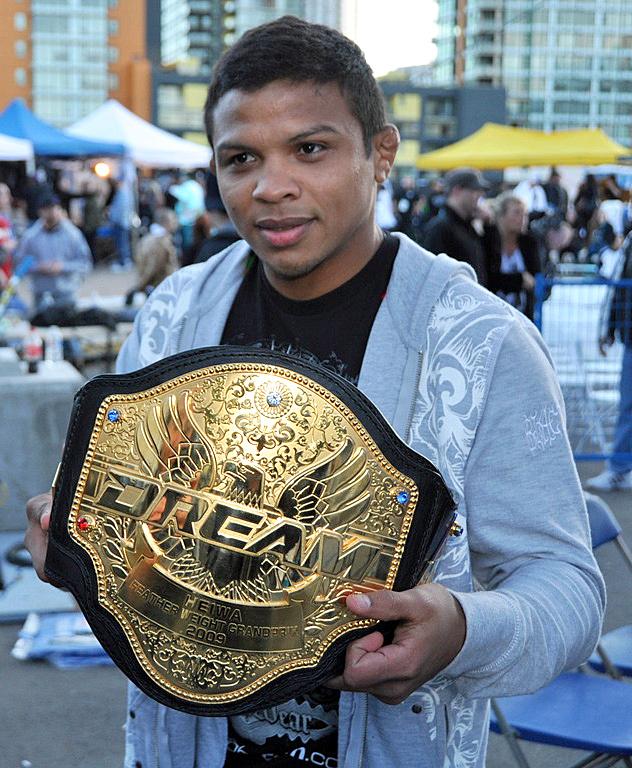
The first black-belt world title brought a flood of offers to fight in MMA. He took his first fight in 2004 and won it in 31 seconds, then stepped away for about a year and a half to concentrate on jiu-jitsu. His second and third professional fights were both losses, to Urijah Faber and Kid Yamamoto. He said afterwards that he had no proper striking coaches at the time, and that the lesson was to round off his game rather than lean on jiu-jitsu alone. He moved to Canada in 2007 and went on a winning run there. At DREAM he became champion in two divisions, featherweight and bantamweight. In 2012 he signed with ONE, an Asian promotion, and the following year he won its bantamweight world title. ONE did not renew his contract in December 2023, but he came back for one last fight on February 20, 2025, against Kevin Belingon at ONE 171 in Qatar, his first since 2022. Knockdown News reported that he won it on a split decision and retired.Flash Academy
The school he had long wanted to own opened in 2023: Flash Academy Martial Arts in British Columbia. Speaking to Graciemag in early 2024, he said his students were "like my children now". He looks after them, asks the more aggressive ones to go easy on white belts, and has taken students to championships. He also said he was waiting for a chance to compete in the gi again, perhaps at IBJJF Masters or Pan American events. "My school is not all about jiu-jitsu," he told ONE in 2025. Life is much bigger, he said, and part of the teaching is helping students understand that. In the same interview he said that someone who reaches the top from humble beginnings has something to teach. He expects to keep doing jiu-jitsu for decades, and the coaching comes with it: "I love coaching."Sources & references (9)
BJJ Heroes, fighter database entry and biography for Bibiano Fernandes.(opens in a new tab)
BJJ Heroes says Fernandes was born in Manaus in 1980.
Where in the source: Biography, first sentence.
Accessed:
BJJ Heroes says he received his black belt in 2002 and that his first black-belt world title was followed by a flood of MMA offers.
Where in the source: Biography paragraph on his rise: “black belt in 2002”.
Accessed:
BJJ Heroes lists his IBJJF record as black-belt world titles in 2003, 2005 and 2006, Pan American titles in 2004, 2005 and 2006, a world runner-up finish in 2004 and a Pan American third place in 2007.
Where in the source: Main Achievements in BJJ list.
Accessed:
BJJ Heroes says a woman who trained at the academy and had noticed him watching classes paid his monthly fees, and that he won his first competition as a white belt after two weeks of training.
Where in the source: Biography paragraph on first training; “a lady who trained at the academy”.
Accessed:
It says he accepted his first MMA fight in 2004, won it in 31 seconds, and then stopped for about a year and a half to focus on jiu-jitsu again.
Where in the source: Biography paragraph on the MMA offers.
Accessed:
It places his move to Canada in 2007, where he met Brazilian MMA veteran Pele Landi and went on a winning run.
Where in the source: Biography final paragraph.
Accessed:
It lists the lineage Maeda, Carlos Gracie, Osvaldo Alves, Faustino Neto, Bibiano Fernandes, and says he fought for Gracie Barra in jiu-jitsu.
Where in the source: Lineage and Team/Association lines of the info box.
Accessed:
It says he became known as “The Flash” early in his jiu-jitsu career because he finished fights early.
Where in the source: Info box, Nickname line.
Accessed:
Bleacher Report, Jonathan Snowden profile built on an email interview with Fernandes, 23 May 2013.(opens in a new tab)
Fernandes grew up in the slums of Manaus. Snowden writes that his mother died when he was seven, and that her death was the point where the household fell apart.
Where in the source: Section on Manaus childhood; paragraph on the mother’s death at seven.
Accessed:
Fernandes says his father told him he had no choice but to send the five children away after the mother died, and that he understood the decision and holds no grudge.
Where in the source: Quoted reply after the father’s decision: “no choice”.
Accessed:
By his own account he spent about three years living in the Amazon forest, hunting and scavenging for food and building shelter from branches, and he had malaria several times and nearly died before his father called him back to the city.
Where in the source: Interview section on the jungle years; anchors “about three years” and “malaria”.
Accessed:
Fernandes says he first met jiu-jitsu while cleaning car windows outside a local gym, and that some of the athletes invited him inside to watch the training.
Where in the source: Narrative paragraph after the jungle section: “car windows” outside a dojo.
Accessed:
Fernandes says he could not afford to join; a friend paid for him at first, and after the first month his coach let him train for free on condition that he cleaned the gym every night.
Where in the source: Quote paragraph: “could not afford to join”.
Accessed:
Snowden reports that Fernandes won a competition as a white belt within two weeks of starting and within months was holding his own with the top students at the gym.
Where in the source: Paragraph beginning on his knack for the sport.
Accessed:
Under Faustino “Pina” Neto he won three world titles as a black belt, and he got the nickname “the Flash” for finishing opponents quickly.
Where in the source: Paragraph naming Pina Neto and the nickname.
Accessed:
Snowden writes that Fernandes lost to both Kid Yamamoto and Urijah Faber, in his second and third professional MMA fights. Fernandes says he had no proper striking coaches and took from it that he had to round off his game rather than rely on jiu-jitsu alone.
Where in the source: MMA section; quote beginning “When I fought them”.
Accessed:
Snowden wrote in 2013 that Fernandes had been reported in 2012 as a UFC signing, that this proved premature, and that he instead signed with ONE FC, which Snowden calls the leading promotion in Asia.
Where in the source: Section on his contract: sentence on the premature UFC report and the move to ONE FC.
Accessed:
ONE Championship, feature on Fernandes’s life and career, 11 March 2020.(opens in a new tab)
ONE’s profile says Fernandes lost his mother at seven and that his father sent him and five siblings to an aunt deep in the jungle, where the children lived off the land; he later caught malaria and his father took him back to Manaus.
Where in the source: Section “Poverty And Critically Ill In The Rainforest”.
Accessed:
ONE reports that Fernandes was washing car windows at about thirteen when he came upon a gym teaching jiu-jitsu; he could not pay, and the coach told him to clean the gym instead.
Where in the source: Section “Discovering Brazilian Jiu-Jitsu”.
Accessed:
He says the coach’s offer led him to go every day, cleaning and helping, and that the sport gave him a community.
Where in the source: Quote beginning “He told me”: “just clean the gym”.
Accessed:
ONE says he earned the nickname through quick submissions in his early competitions and received his black belt in 2002.
Where in the source: Section “Discovering Brazilian Jiu-Jitsu”; paragraph on the nickname and the 2002 black belt.
Accessed:
Fernandes says jiu-jitsu taught him self-discipline and gave him confidence in daily life.
Where in the source: Quote: “It is self-discipline.”
Accessed:
ONE’s profile says Fernandes went on to become a two-division DREAM World Champion, and links this to advice from a coach on the Revolution Fight Team in Vancouver about not rushing finishes in the cage.
Where in the source: Section on Revolution and Evolution; sentence on the DREAM titles and the coach’s advice.
Accessed:
ONE says Fernandes joined its promotion, which it calls the home of martial arts, in 2012 and won the ONE Bantamweight World Championship the following year, and calls him the most dominant athlete in ONE history.
Where in the source: Same section, paragraph after the DREAM sentence.
Accessed:
ONE Championship, feature on Fernandes’s first jiu-jitsu coach, 12 September 2019.(opens in a new tab)
ONE reports that Fernandes began jiu-jitsu at 14 and paid for lessons with money from washing cars, and that his first coach was Ulisses Paixão.
Where in the source: Opening paragraphs; coach named as Ulisses Paixão.
Accessed:
When he could no longer pay, Fernandes asked his coach for help, and was told to come train, clean the gym, and turn out the lights and lock up when people had left.
Where in the source: Quoted exchange with the coach.
Accessed:
Fernandes says the nightly chores kept him humble and focused while his friends went out.
Where in the source: Quote: “It taught me to be humble”.
Accessed:
As he progressed, the coach let him teach some of the children’s classes, and eventually freed him from cleaning duties so he could concentrate on training and coaching.
Where in the source: Paragraphs on his widening role in the gym.
Accessed:
Graciemag, short report on Fernandes’s visit to Manaus, 20 October 2010.(opens in a new tab)
In a report from Manaus around the time he held the DREAM featherweight title, Graciemag says his master, Pina, calls him “Bibis”, and notes he lives and teaches jiu-jitsu in Canada and was 2006 light-featherweight world champion.
Where in the source: Second paragraph: master Pina calls him “Bibis”.
Accessed:
Graciemag, interview with Fernandes about his post-ONE phase and academy, 2 January 2024.(opens in a new tab)
Fernandes says that when he knew the jiu-jitsu competitor André Galvão, in the days of master Osvaldo Alves, they slept there on the mat and trained a great deal while Galvão was still a blue belt.
Where in the source: Galvão seminar section: “slept there on the mat”.
Accessed:
Graciemag quotes Fernandes on running Flash Academy in Canada: students are “like my children now”, he looks after them, asks the aggressive ones to go easy on white belts, and has taken students to championships.
Where in the source: Academy section; quote “like my children now”.
Accessed:
Graciemag reports that in December 2023 his ONE contract was not renewed, and that he said he was waiting for a chance to compete in the gi again, possibly at IBJJF Masters or Pan American events.
Where in the source: Retirement section and closing quote.
Accessed:
Graciemag writes that at DREAM Fernandes was champion in two divisions, featherweight and bantamweight.
Where in the source: Interview intro, second paragraph, DREAM sentence.
Accessed:
ONE Championship, interview piece on Fernandes’s coaching and academy, 18 February 2025.(opens in a new tab)
ONE reports that in 2023 Fernandes opened Flash Academy Martial Arts in British Columbia, Canada, a long-held dream to have his own school.
Where in the source: Interview section on the academy; “In 2023”.
Accessed:
He says his school is not only about jiu-jitsu: life is much bigger, and part of the teaching is helping students understand that. Elsewhere in the same interview he says a world champion who comes from humble beginnings has something to teach.
Where in the source: Quote beginning “My school is not all about jiu-jitsu”.
Accessed:
Fernandes says he plans to do jiu-jitsu for decades and that he loves coaching.
Where in the source: Quote: “I love coaching”.
Accessed:
ONE’s 2025 preview said the 20 February fight against Belingon at ONE 171 in Qatar would be the final fight of his professional career and his first since 2022.
Where in the source: Opening paragraphs, sentences on the Thursday 20 February bout and the final fight.
Accessed:
Wikipedia, article on Bibiano Fernandes, read 12 November 2026.(opens in a new tab)
Wikipedia lists a black-belt world title in 2003, 2005 and 2006, a silver in 2004, and Pan American golds in 2004, 2005 and 2006 for Fernandes.
Where in the source: Section Championships and accomplishments, Brazilian jiu-jitsu list.
Accessed:
Wikipedia gives his birth year as 1980 in Manaus.
Where in the source: Infobox and lead sentence, born entry.
Accessed:
Knockdown News, Jack Wannan, report on the ONE 171 result and Fernandes’s career, 20 February 2025.(opens in a new tab)
Knockdown News says Fernandes briefly held a featherweight title in DREAM, beating Joachim Hansen by split decision in 2010, and that in 2012 he signed with ONE Championship, which became most of his competitive career.
Where in the source: Paragraphs beginning on Dream and on the 2012 deal.
Accessed:
Knockdown News reports that on 20 February 2025, at ONE 171 in Lusail, Qatar, the 44-year-old Fernandes won a split decision over Kevin Belingon, his fourth win in five meetings, and presents the result as his retirement.
Where in the source: Opening paragraphs of the report.
Accessed:
Competition results
| Year | Event | Result | Division |
|---|---|---|---|
| 2006 | IBJJF World ChampionshipSource: en.wikipedia.org-64 kgGiVerified | 1st place | -64 kgGiVerified |
| 2005 | IBJJF World ChampionshipSource: en.wikipedia.org-64 kgGiVerified | 1st place | -64 kgGiVerified |
| 2003 | IBJJF World ChampionshipSource: en.wikipedia.org-64 kgGiVerified | 1st place | -64 kgGiVerified |