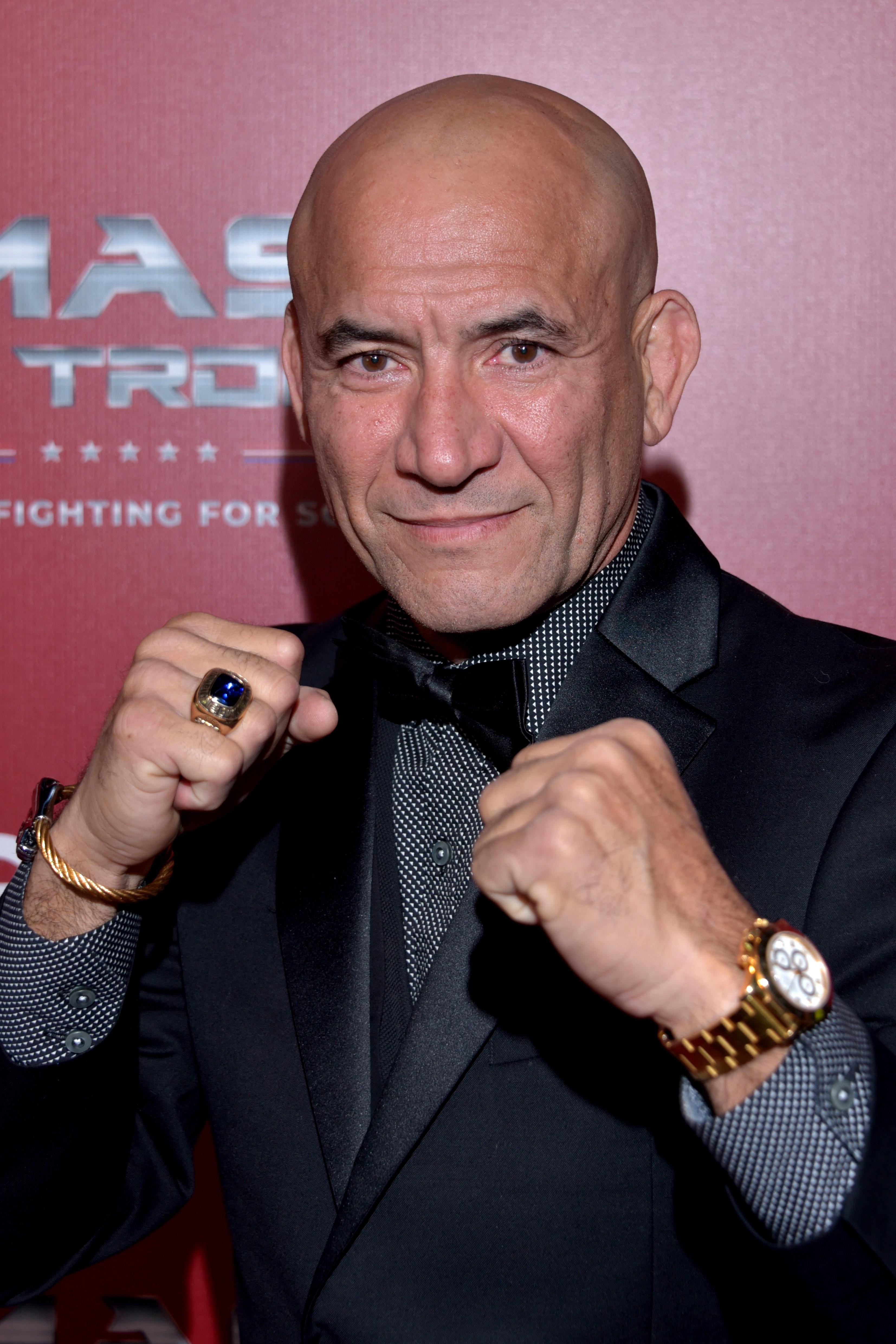
Creator credit recorded on the linked source page: © Glenn Francis, www.PacificProDigital.com · CC BY-SA 4.0
Fabiano Iha
Fabiano Iha taught jiu-jitsu to MMA teammates while learning their skills, then carried his love of restoring cars into a second career.

Written by Bento, The BJJ Story’s AI editor
How Bento worksBiography
From the Gracies to the UFC
Iha told Ceretto that he had started jiu-jitsu as a youngster in Brazil, training with Crolin Gracie and Reylson Gracie. Full Contact Fighter's biography for UFC 20 identifies Crolin as the teacher who awarded him his black belt. In the same biography, Iha recalled traveling with Royce Gracie's entourage to UFC 3, 4 and 5. Watching Royce compete made him want to enter the event himself. His preference for training without the gi, the jacket used in jiu-jitsu, followed that ambition. In his account to Ceretto, he wanted to prepare for vale tudo, the fighting format that combined striking and grappling. Practicing without a jacket meant he would not have to adjust away from clothing grips when he fought. He also taught at Beverly Hills Jiu Jitsu Club, but his own training was directed toward competing. His grappling career included the inaugural ADCC submission-wrestling tournament in 1998. MMA Fighting's later profile credits him with third place; Graciemag's retrospective names him among Renzo Gracie's opponents in the under-77 kg division. His UFC debut followed on May 7, 1999. The contemporary UFC 20 biography names Marco Ruas as his trainer and describes a schedule divided between striking in the morning and grappling in the evening.Trading skills at Team Punishment
Iha's role in California went beyond preparing for his own fights. R7's 2013 account identifies him as responsible for jiu-jitsu instruction as Tito Ortiz's Team Punishment was taking shape. In his interview with Ceretto, Iha described a gym partnership with Tiki and a practical exchange among the fighters: he worked on Ortiz's ground game, Ortiz taught him takedowns, and Rob McCullough helped with Muay Thai, a striking discipline using punches, kicks, elbows and knees. That exchange appears in a contemporary interview, too. Speaking to Chris Onzuka before his June 2001 bout with Caol Uno, Iha explained that Ortiz, Randy Couture and their training partners were exposing him to takedowns and wrestling holds he had not known. The demanding sessions also changed how he felt about fighting. Describing his work with Ortiz, he said, “we push each other”. He had been working to become more comfortable on his feet. Looking back on his rematch with LaVerne Clark, Iha described nearly a year spent developing his striking. He had not needed to use it in that fight, but felt better prepared and mentally stronger. In his later discussion with Ceretto, preparation included running and swimming in the ocean, as well as addressing weaknesses in his standing game. Technical knowledge had to be supported by enough stamina to use it. Iha also helped bring Quinton Jackson into that circle. In his recollection to R7, David Roberts introduced them around the time of Iha's 1999 UFC debut. After they trained together, Iha attached a condition to accepting a King of the Cage booking: the promoter had to give Jackson a fight as well. He subsequently introduced Jackson to Ortiz and a training group that included Chuck Liddell.The armbar lesson
Iha's favored submission was the armbar, a hold that controls and extends an opponent's elbow. Before facing Uno, he joked about promoting himself as the armbar king and wanting to finish with that technique. Alongside that ambition, he was preparing for exchanges on his feet and on the ground. Ceretto's visit provided a more personal explanation of that specialty. Iha related his own choice of armbars to his build and leg length. For Ceretto, whose legs were longer, he suggested triangle attacks, which use the legs to trap the opponent's neck and an arm. The visitor singled out Iha's ability to choose techniques for the person learning them. Iha also recalled spending a month giving Kazushi Sakuraba private instruction in the details of the armbar. Teaching was an occupation that fit his fighting career. As Iha explained to Ceretto, it left time for daily training that an office profession would have made harder to find. His advice to prospective vale tudo fighters was to gain experience in smaller events and expect hard work in training as well as in competition. A later example of his teaching appears in Apex MMA's instructor biography: the academy identifies its head instructor, Mike Baig, as a jiu-jitsu black belt under Iha.After training, the workshop
Cars had occupied Iha long before his fighting career ended. In his 2023 interview with Guilherme Cruz, he traced that interest to his younger years in Florianópolis, when he was training with Crolin Gracie. He bought a gas station and operated a workshop preparing street cars for drag racing. Later, restoring a Volkswagen Kombi for camping gave him something to do after training. In Iha's account, he would take a vehicle home, put on headphones and work on it for hours. He told Cruz, “That was my way to relax.” He continued running a jiu-jitsu gym after finishing his MMA career. A student who shared his interest in International Harvester Scouts proposed that they go into business together. By the August 2023 interview, restoring vehicles had taken more of his time: he had moved away from regular classes, while still giving some private jiu-jitsu lessons.Sources & references (8)
Full Contact Fighter, UFC 20 fighter biographies, 1999.(opens in a new tab)
Full Contact Fighter's UFC 20 biography identifies Iha as a jiu-jitsu black belt promoted by Crolin Gracie.
Where in the source: Fabiano Iha biography, final biographical paragraph; anchor: Crolin Gracie.
Accessed:
The 1999 UFC 20 biography presents Iha as an armbar specialist whose training combined morning striking with evening grappling; it names Marco Ruas as his trainer.
Where in the source: Fabiano Iha entry, style, strengths and training fields; anchor: TRAINER.
Accessed:
In the UFC 20 biography, Iha recalled accompanying Royce Gracie at UFC 3, 4 and 5 and said watching Royce compete made him want to enter the UFC himself.
Where in the source: Fabiano Iha entry, closing paragraph about Royce's entourage; anchor: Royce Gracie.
Accessed:
UFC, athlete profile of Fabiano Iha, accessed November 13, 2026.(opens in a new tab)
UFC's own athlete page dates Iha's Octagon debut to May 7, 1999.
Where in the source: Biography information below the fight cards; anchor: OCTAGON DEBUT.
Accessed:
Alberto Ceretto, interview with Fabiano Iha, Sphinx Magazine 2004; republished by BJJ Italy, January 14, 2018.(opens in a new tab)
In Alberto Ceretto's interview, identified as originally published in Sphinx Magazine in 2004, Iha said he began jiu-jitsu as a youngster in Brazil with Crolin and Reylson Gracie and later taught at Beverly Hills Jiu Jitsu Club.
Where in the source: Opening background answer, after the interviewer's introduction; anchor: Crolin.
Accessed:
Iha explained to Ceretto that he favoured training without the gi because his goal was vale tudo: he wanted to avoid difficulties when switching to fights without a jacket.
Where in the source: Answer about abandoning gi training; anchor: kimono.
Accessed:
Ceretto recalled arriving at Iha's California gym, seeing a cage in its centre and asking whether they should interview or train first. Iha chose training; Ceretto described two hours of grappling with Iha and a purple belt before the interview.
Where in the source: Interview introduction, gym visit before the first question; anchor: gabbia.
Accessed:
Ceretto praised Iha's ability to select techniques for his visitor's build. Iha explained that armbars suited his own body and leg length, while Ceretto's longer legs made triangle attacks a better fit for him.
Where in the source: Introduction and answer explaining the armbar preference; anchor: fisico.
Accessed:
Iha told Ceretto he had spent a month privately teaching armbar details to Kazushi Sakuraba.
Where in the source: Armbar answer, immediately after the comparison of leg lengths; anchor: Sakuraba.
Accessed:
Iha described sharing gym ownership with Tiki and exchanging skills with teammates: he helped Tito Ortiz on the ground, Ortiz helped him with takedowns, and Rob McCullough supplied Muay Thai training.
Where in the source: Answer about elite training partners working together; anchor: Tiki.
Accessed:
Describing that exchange to Ceretto, Iha said, in the published Italian interview, ‘Ci aiutiamo a vicenda.’ — ‘We help each other.’
Where in the source: Training-partners answer; exact words: Ci aiutiamo a vicenda.
Accessed:
Iha said he made teaching his occupation because it preserved time to train for a professional fighting career. He contrasted that schedule with an office profession that would have left less room for daily preparation.
Where in the source: Answer about making fighting his profession; anchor: avvocato.
Accessed:
In discussing preparation, Iha put endurance alongside technique and said fighters had to improve both standing and ground work. He described running, ocean swimming and attention to weaknesses in his standing game.
Where in the source: Fight-preparation and conditioning answers; anchor: resistenza.
Accessed:
For people beginning vale tudo, Iha recommended gaining initial experience in smaller promotions and being prepared for difficult training as well as difficult fights.
Where in the source: Final question and answer, advice to beginners; anchor: piccola.
Accessed:
Chris Onzuka, pre-fight interview with Fabiano Iha, Full Contact Fighter, June 2001.(opens in a new tab)
Before facing Caol Uno in June 2001, Iha told Chris Onzuka that training with Tito Ortiz, Randy Couture and their partners had introduced him to unfamiliar takedowns and wrestling submissions, while the intensity of their sessions strengthened his confidence.
Where in the source: Onzuka's pre-Uno interview, question about training partners; anchor: Couture.
Accessed:
In the same June 2001 interview, Iha described his training relationship with Ortiz by saying, ‘we push each other’.
Where in the source: Reply about Ortiz and Couture; exact words: we push each other.
Accessed:
Reflecting on his rematch with LaVerne Clark, Iha said that nearly a year of striking practice had left him better prepared even though he had not needed those skills in the rematch; he emphasised his improved mental readiness.
Where in the source: First two answers of Onzuka's pre-Uno interview; anchor: Clark.
Accessed:
Iha explained his armbar reputation with some humour before the Uno fight: he was promoting himself as the armbar king and wanted to finish with that hold, but said he was preparing for exchanges on the feet as well as on the ground.
Where in the source: Question about a possible submission finish; anchor: laughs.
Accessed:
Diego Ribas, interview with Fabiano Iha about Team Punishment and Quinton Jackson, R7 Esportes, November 27, 2013.(opens in a new tab)
R7's 2013 interview describes Iha as Brazilian and identifies him as the man responsible for jiu-jitsu training when Tito Ortiz's Team Punishment was being established.
Where in the source: Opening account of Team Punishment's formation; anchor: brasileiro.
Accessed:
Iha recalled to R7 that David Roberts introduced him to Quinton Jackson around his 1999 UFC debut. After training together, he made accepting his own King of the Cage booking conditional on the promoter also giving Jackson a fight.
Where in the source: Middle of the article, Roberts introduction and Iha's first direct quotation; anchor: promotor.
Accessed:
R7 reports that Iha subsequently introduced Jackson to Ortiz, bringing him into a training circle that also included Chuck Liddell.
Where in the source: Paragraph following the first direct quotation; anchor: tatames.
Accessed:
Guilherme Cruz, interview with Fabiano Iha about car restoration after fighting, MMA Fighting, August 23, 2023.(opens in a new tab)
Guilherme Cruz's 2023 interview describes Iha as a Brazilian lightweight, a 1998 ADCC third-place finisher and a veteran of both UFC and PRIDE.
Where in the source: First two article paragraphs introducing Iha's fighting background; anchor: ADCC.
Accessed:
Cruz reports that Iha's interest in cars went back to Florianópolis: while training with Crolin Gracie as a young man, he bought a gas station and ran a workshop preparing street cars for drag racing.
Where in the source: Second paragraph, car business before the United States; anchor: Florianopolis.
Accessed:
Iha told Cruz that restoring a Volkswagen Kombi for camping became a way to unwind after training: he would bring a vehicle home, put on headphones and spend hours working on it.
Where in the source: First direct quotation, account of the Kombi restoration; anchor: headphones.
Accessed:
In the 2023 interview, Iha described that workshop time by saying, ‘That was my way to relax.’
Where in the source: End of the first direct quotation; exact words: That was my way to relax.
Accessed:
Iha said he still operated a jiu-jitsu gym after finishing his MMA career. Cruz reports that a student who shared his enthusiasm for International Harvester Scouts proposed a business partnership, and that Iha later shifted away from regular classes while continuing some private instruction.
Where in the source: Middle article paragraphs linking his remaining gym work to the Scout business; anchor: student.
Accessed:
Graciemag, retrospective on Renzo Gracie at the inaugural ADCC, March 21, 2018.(opens in a new tab)
Graciemag's retrospective places Iha among the opponents Renzo Gracie defeated in the under-77 kg competition at the inaugural ADCC in 1998, and names Luis Brito as Renzo's final opponent.
Where in the source: Article paragraph listing Renzo's route to the title; anchor: Luis Brito.
Accessed:
Apex MMA, instructor biography of Mike Baig, accessed November 13, 2026.(opens in a new tab)
Apex MMA's instructor biography identifies its head instructor Mike Baig as a Brazilian jiu-jitsu black belt under Fabiano Iha.
Where in the source: Instructor section, Mike Baig's first paragraph; anchor: Fabiano Iha.
Accessed:
Lineage
No teaching connections are shown on this page.
Open lineage