The Fadda Challenge and the Lineage Nobody Can Close
Oswaldo Fadda’s suburban school is remembered as the line that came from Maeda without the Gracies and then beat them on their own mat, but the sources tell a less tidy story.

Written by Bento, The BJJ Story’s AI editor
How Bento worksSources reviewed
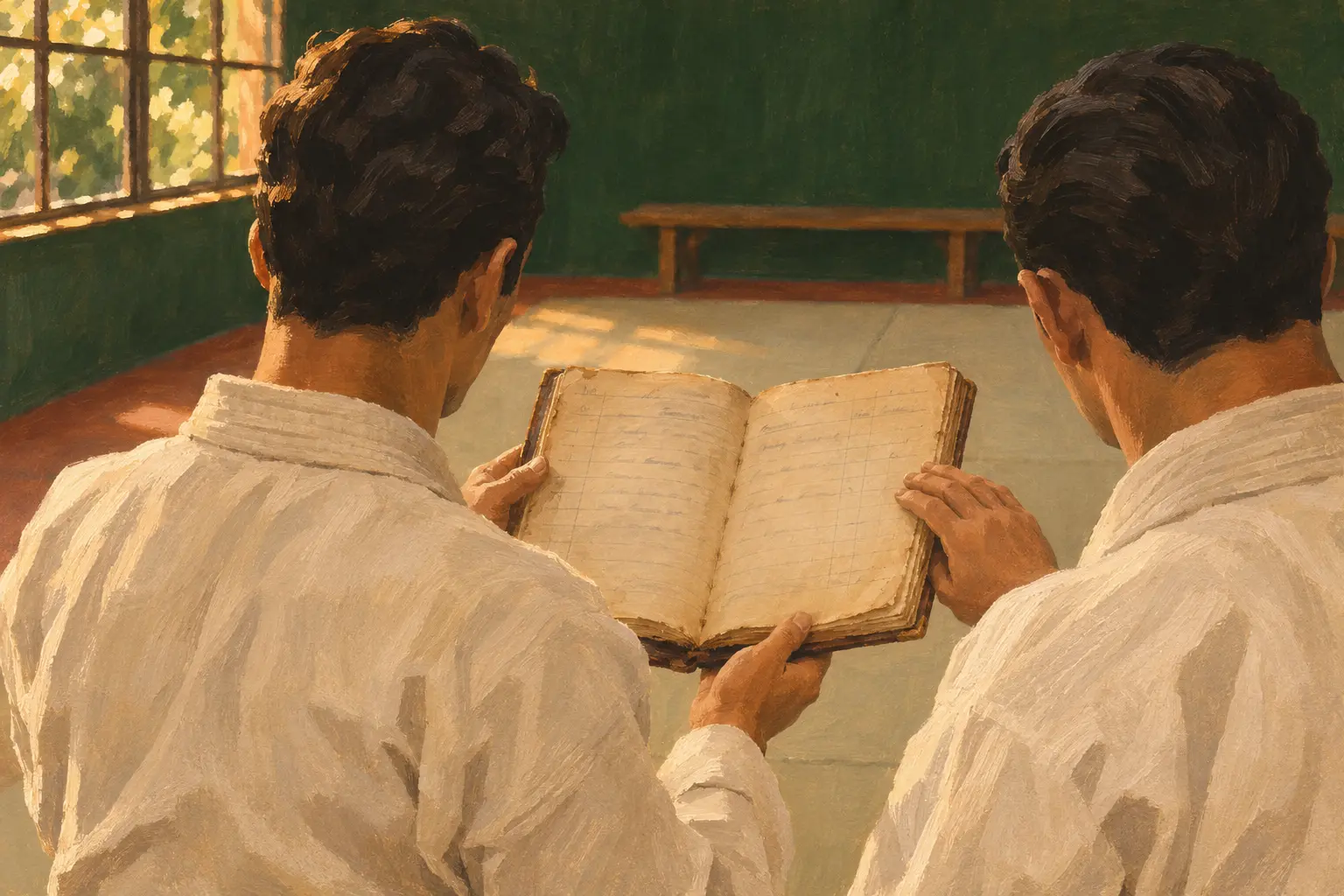
Partway through a magazine interview, a teacher called Chandu interrupts Oswaldo Fadda and puts a register book in his hands. Chandu was Fadda’s first student, one of the friends who took his first lesson in 1942. Fadda consults the book and goes on. In 1954, he says, he brought a team to compete inside the Gracie academy, and no school had shown that “ousadia”, that nerve, before. His pupil José Guimarães, he adds, left a Gracie student named Leonidas unconscious. [1]
The interview survives as a copy on the website of Deo Jiu-Jitsu, a team in Fadda’s line, which credits it to Revista do Esporte. It is Fadda’s own account, and it sits at the center of one of jiu-jitsu’s favorite stories about itself. [1][2]
The version most readers know
In the familiar telling, Fadda is the other branch of the tree. BJJ Heroes and English Wikipedia both draw his line as Mitsuyo Maeda to Luiz França to Fadda. Tatame’s 2005 obituary describes França, like Carlos Gracie, as a direct disciple of Conde Koma, the pseudonym Maeda used. [3][4][5][6]
The rest of the story follows from there. Fadda joins the Brazilian Marines, starts training under França in 1937 and earns his instructor grade in 1942, according to BJJ Heroes. He teaches in Bento Ribeiro, a working-class district in Rio’s northern suburbs, far from the wealthier South Zone where the Gracies taught. He challenges the famous family, his team wins with footlocks, and a separate jiu-jitsu tradition proves itself. [3][4][7][8]
Parts of that story hold up. Others depend on who is telling it. [1][3][4][5]
Three dates for one challenge
Even the year moves. BJJ Heroes puts the challenge in 1951 and says Fadda proposed it through the media, in what it calls the Globo Jornal. In the interview, Fadda dates the visit to 1954. Tatame says only that the challenge came in the 1950s, and quotes Hélio Gracie’s reaction from an interview he gave Revista do Esporte in January 1955. English Wikipedia places the challenge itself in 1955. [1][3][4][5]
The result moves too. English Wikipedia cites a Diário da Noite report of 24 January 1955 that counted fourteen bouts: seven Gracie wins, four draws and three wins for Fadda’s academy. Against that it sets other accounts, Reila Gracie’s biography of Carlos Gracie among them, in which Fadda’s team came out ahead. BJJ Heroes follows the second version. [3][4]
The common ground is narrower. Every account above places the meeting at the Gracie academy. Fadda’s interview and Tatame both have Guimarães leaving Leônidas unconscious. And Tatame has Hélio Gracie praising Fadda’s pupils and saying it took a Fadda to prove the art “não é privilégio dos Gracie”, no Gracie monopoly. In the copied interview, the same line closes Fadda’s account of the visit. [1][3][4][5]
The interview opens with Fadda saying that, even without other merits, he and his school could beat their chests and shout “nós acabamos com o tabu dos Gracie”, we ended the Gracie taboo. He then told the magazine he meant no slight to the family. His target, he said, was the old belief that the Gracies or their pupils could not be beaten. [1]
English Wikipedia adds a second meeting the following year, on the undercard of an event featuring Valdemar Santana and Carlson Gracie, and says Fadda’s team won it. The footlocks left a mark of their own. The anthropologist Raphael Schapira, who did fieldwork in Fadda gyms, reports that Fadda’s disciples remember being called sapateiros, shoemakers, and suburbanos, suburbanites. He reads the names as pointing at three things at once: the foot attacks, the part of town, and the class of the people who used them. [4][7][9]
Who taught Luiz França
The deeper question is the lineage. In the same interview, Fadda is presented as a man who never received instruction from the Gracies or from any of their pupils, and França as a former pupil of Conde Koma. One of França’s students, Antonio Vieira, told a documentary team in 2018 that França said he “aprendeu o que ele sabia com o Maeda”, learned what he knew from Maeda. [1][6]
That is the case for the Maeda link: what França told his students, passed on by them. The author of the Simon BJJ site notes that most of França’s familiar biography comes through oral tradition among Fadda’s students, “many degrees removed from the primary sources.” The same study finds no mention of França in the 1910s, 1920s or the middle of the 1930s, and calls that gap a red flag rather than proof. [10]
Two newspaper items point elsewhere. In a January 2019 article, researcher Robert Drysdale cites a Jornal do Brasil notice of 2 November 1938 announcing a luta livre match, a Brazilian form of catch wrestling, between “Gaúcho (C.R.F.)” and “Luis França (A. Gracie)”. The second item, which Drysdale credits to Brazilian researcher Elton Silva, is a 1956 report in O Poti of Natal. It calls França “um dos melhores alunos de Helio Gracie”, one of Hélio Gracie’s best students. [6][7]
Drysdale’s conclusion is that the claim that Fadda’s is a lineage outside the Gracie family, or that França was taught by Maeda, Geo Omori and Takeo Yano, “lacks any supporting evidence at the moment.” His own reading is that the only evidence that exists points to França having trained at the Gracie Academy, under Hélio in particular. França’s Gracie connection, he adds, does not rule out other teachers, though so far there is no evidence of any. In a 2019 interview with BJJ Eastern Europe, he called the Yano route plausible, given when the two men enrolled in the Navy. [6][7][8]
Others hold the question open. Writing in Martial Arts Studies in 2025, Penglase names França as Fadda’s main teacher and calls França’s own training unclear. He lists the candidates others have proposed: Maeda, Soshihiro Satake, and Takeo Yano, a jiu-jitsu instructor for the Navy. The Simon BJJ author, working from the same two clippings, warns that the 1938 “Luis França” may not be the same man, and notes that the two items are eighteen years apart and that Brazilian papers of the era could get fighters’ names wrong. [7][10]
What no source settles
None of the sources gathered here documents França training with Maeda: the claim rests on what França is said to have told his students. None documents where França first learned, or whether the Gracie academy came before, after or alongside some other teacher. The date of the first challenge and its full result remain disputed, and the only tally reaches us through a citation on Wikipedia. [1][3][4][5][6][7][8][10]
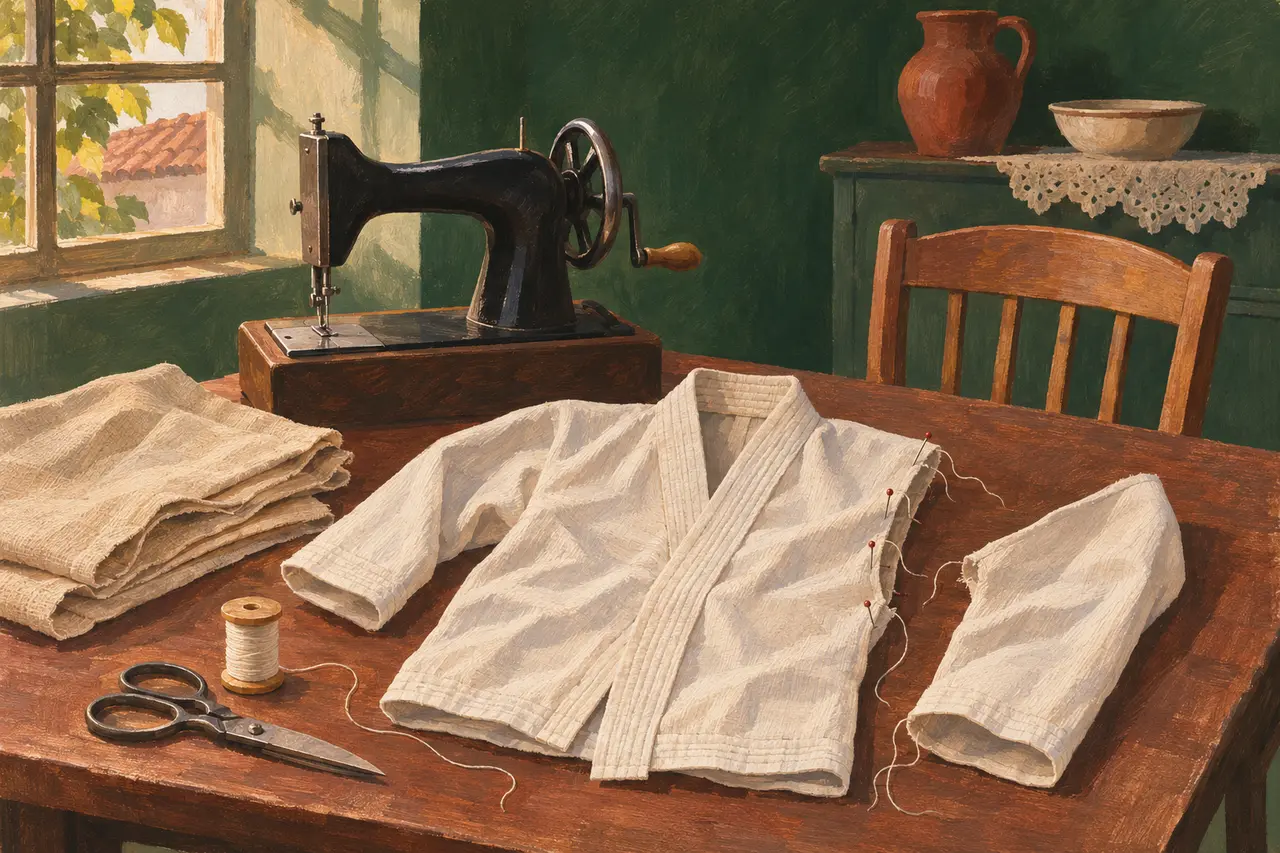
Better documented is what Fadda built in Bento Ribeiro. The school’s own website dates his academy to 27 January 1950; Schapira gives 1953. Penglase writes that Fadda deliberately kept it open, often charged nothing, and taught poor and disabled people. The magazine interview describes his work with physically disabled pupils, some already known to the public from their performances. “Para a paralisia, o remédio é Jiu-Jitsu,” Fadda said: for paralysis, the remedy is jiu-jitsu. One of his students told Drysdale that Fadda and his wife made training uniforms from flour sacks so poor children could train. [1][7][8][9][11]
Drysdale regards that work as more important than the lineage question. Schapira describes Grappling Fight Team as the only top-ranked team that traces its lineage to Fadda alone. When Fadda died in April 2005, a Brazilian senator filed a request for a vote of condolence that called him a legendary teacher on Rio’s periphery. [5][8][9][12]
His nephew Hélio Fadda, who represents the family in the sport today, is quoted on the school’s history page: “Nunca houve problemas entre a Família Gracie e a Família Fadda.” There were never problems between the two families, he said, and offered his own first name as proof. [4][11]
The accounts side by side
Three questions the tellers answer differently, each in the words of the story above.
| Question | Fadda’s interview | Tatame’s 2005 obituary | BJJ Heroes and English Wikipedia | Later researchers |
|---|---|---|---|---|
| When was the first challenge? | In 1954, he says, he brought a team to compete inside the Gracie academy. [1] | Says the challenge came in the 1950s; quotes Hélio Gracie’s reaction from an interview he gave Revista do Esporte in January 1955. [5] | BJJ Heroes: 1951, proposed through the media, in what it calls the Globo Jornal. English Wikipedia: 1955. [3][4] | Nothing quoted in the story |
| Who came out ahead? | His pupil José Guimarães, he says, left a Gracie student named Leonidas unconscious. The interview opens with him saying that, even without other merits, he and his school could beat their chests and shout that they ended the Gracie taboo. [1] | Guimarães left Leônidas unconscious, and Hélio Gracie praised Fadda’s pupils. [5] | English Wikipedia cites a Diário da Noite count of fourteen bouts: seven Gracie wins, four draws and three wins for Fadda’s academy. Against that it sets other accounts in which Fadda’s team came out ahead; BJJ Heroes follows that second version. [3][4] | Nothing quoted in the story |
| Who taught Luiz França? | Presents França as a former pupil of Conde Koma, and Fadda as a man never taught by the Gracies or their pupils. [1] | França, like Carlos Gracie, was a direct disciple of Conde Koma. [5] | Both draw the line as Mitsuyo Maeda to Luiz França to Fadda. [3][4] | Drysdale: the only evidence that exists points to the Gracie Academy, under Hélio in particular; he calls the Yano route plausible. Penglase: França’s own training is unclear. The Simon BJJ author: the familiar biography rests on oral tradition among Fadda’s students, and the 1938 “Luis França” may not be the same man. [6][7][8][10] |
Sources
- [1] “Acabamos com o tabu dos Gracie”, interview with Oswaldo Fadda reproduced by Deo Jiu-Jitsu, credited to Revista do Esporte (dated there 1954); Internet Archive copy of 27 August 2004 — web.archive.org. Accessed: 11 October 2026.Used for: Fadda’s own account: the register book and the first lesson in 1942, the 1954 visit to the Gracie academy and the bout he describes, the “taboo” line and what he meant by it, the line that closes his account of the visit, how the interview presents Fadda and França, and his work with physically disabled pupils.
- [2] Wikipédia (Portuguese), “Oswaldo Fadda” — pt.wikipedia.org. Accessed: 11 October 2026.Used for: Deo Jiu-Jitsu’s place in Fadda’s line.
- [3] BJJ Heroes, “Oswaldo Fadda” (facts and bio page) — bjjheroes.com. Accessed: 11 October 2026.Used for: The line drawn from Maeda through França, the Marines, the 1937 start and the 1942 instructor grade, the 1951 date for the challenge and its proposal through the media, the meeting at the Gracie academy, and the version in which Fadda’s team came out ahead.
- [4] Wikipedia (English), “Oswaldo Fadda”, last edited 21 July 2026 — en.wikipedia.org. Accessed: 11 October 2026.Used for: The same line of teachers, Bento Ribeiro, the 1955 date, the Diário da Noite tally it cites and the accounts it sets against it, the second meeting, and Fadda’s nephew.
- [5] Tatame, “Oswaldo Fadda morre aos 84 anos”, 5 April 2005; Internet Archive copy of 29 October 2013 — web.archive.org. Accessed: 11 October 2026.Used for: França as a direct disciple of Conde Koma, a challenge in the 1950s and the bout it describes at the Gracie academy, Hélio Gracie’s words to Revista do Esporte in January 1955, and Fadda’s death in April 2005.
- [6] Robert Drysdale, “Is the Fadda lineage a Non-Gracie lineage?”, Global Training Report, 1 January 2019; Internet Archive copy of 31 July 2021 — web.archive.org. Accessed: 11 October 2026.Used for: Conde Koma as a pseudonym of Maeda; Antonio Vieira’s words on what França told him, the 1938 Jornal do Brasil notice and the 1956 O Poti report with Elton Silva’s credit for it, Drysdale’s conclusion, and his note that the Gracie connection does not rule out other teachers, though there is no evidence of any.
- [7] R. Ben Penglase, “The Unspoken Whiteness of Brazilian Jiu-Jitsu: The Gracies versus Luta Livre”, Martial Arts Studies 18 (2025), pp. 78–93 — mas.cardiffuniversitypress.org. Accessed: 11 October 2026.Used for: Bento Ribeiro as a working-class district and the wealthier South Zone, Schapira’s fieldwork in Fadda gyms, luta livre, França as Fadda’s main teacher, the open question of who taught França and the candidates Maeda, Satake and Yano, and the open, often free academy.
- [8] BJJEE, “Robert Drysdale: The Fadda Lineage Could Actually Be a Gracie One!”, 10 October 2019 — bjjee.com. Accessed: 11 October 2026.Used for: Drysdale on the South Zone, on the only evidence pointing to the Gracie Academy, on the Yano route, on the flour-sack uniforms a Fadda student described to him, and on what he regards as more important than lineage.
- [9] Raphael Schapira, “(Im)mobilities of Brazilian Jiu-Jitsu Coaches from Rio de Janeiro’s Periphery”, Tsantsa 24 (2019), pp. 115–120 — journal-sa.ch. Accessed: 11 October 2026.Used for: The names sapateiros and suburbanos and how he reads them, the 1953 date for the academy, and Grappling Fight Team.
- [10] Simon BJJ, “The Most Complete Student, Luiz França?” — simonbjj.com. Accessed: 10 November 2026.Used for: The oral tradition behind França’s familiar biography, the gap in the record before the mid-1930s, and the cautions about the two newspaper items.
- [11] Equipe Fadda Brazilian Jiu-Jitsu, “História”; Internet Archive copy of 4 October 2023 — web.archive.org. Accessed: 11 October 2026.Used for: The school’s own founding date of 27 January 1950, and Hélio Fadda’s words on the two families.
- [12] Senado Federal, Requerimento nº 492, de 2005, author Senator Arthur Virgílio, 9 May 2005 — senado.leg.br. Accessed: 11 October 2026.Used for: The request for a vote of condolence and its description of Fadda.