Hélio Gracie vs. Masahiko Kimura, 1951The Fight and Its Versions
Every account agrees that Kimura won; on the rules, the length, the ending and Hélio’s arm, the people who told the story disagree.

Written by Bento, The BJJ Story’s AI editor
How Bento worksSources reviewed
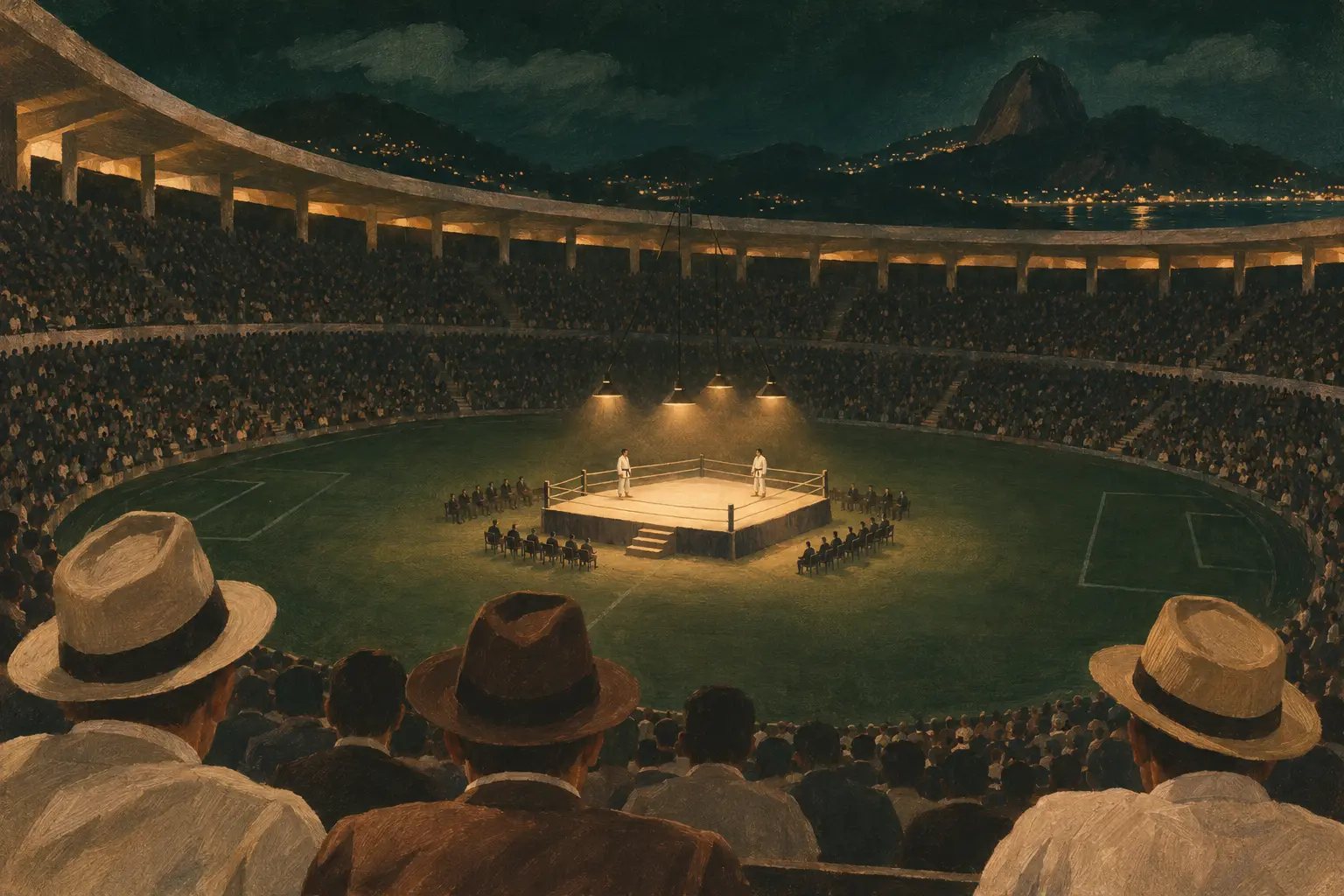
Three days before the fight, Masahiko Kimura wrote, a local newspaper ran a big headline claiming he was not Japanese at all but probably Cambodian, and that Hélio Gracie could not fight a fake. Kimura says he took his passport to the Japanese embassy and came back with proof of his nationality. [1]
That detail comes from his memoir, My Judo, written long after the event. So does much of what people now repeat about the night of 23 October 1951. A 2013 Sherdog feature, which cites Kimura’s book for the crowd, gives the familiar shape: a smaller Brazilian held out against one of the most respected judoka of all time for about thirteen minutes, refused to yield to an arm lock, let the arm break, and was saved only when his brother threw in the towel. The fight is real, and nobody disputes that Kimura won. Nearly everything else has more than one owner. [1][2][3]
The road to the Maracanã
According to the Valente brothers, writing in Graciemag in 2011, a Japanese emissary asked Hélio in November 1950 whether he would meet a champion from Japan. “It would be a pleasure,” Hélio answered. Kimura came to Brazil in 1951 with two other judoka, Toshio Yamaguchi and Yukio Kato. [2][3]
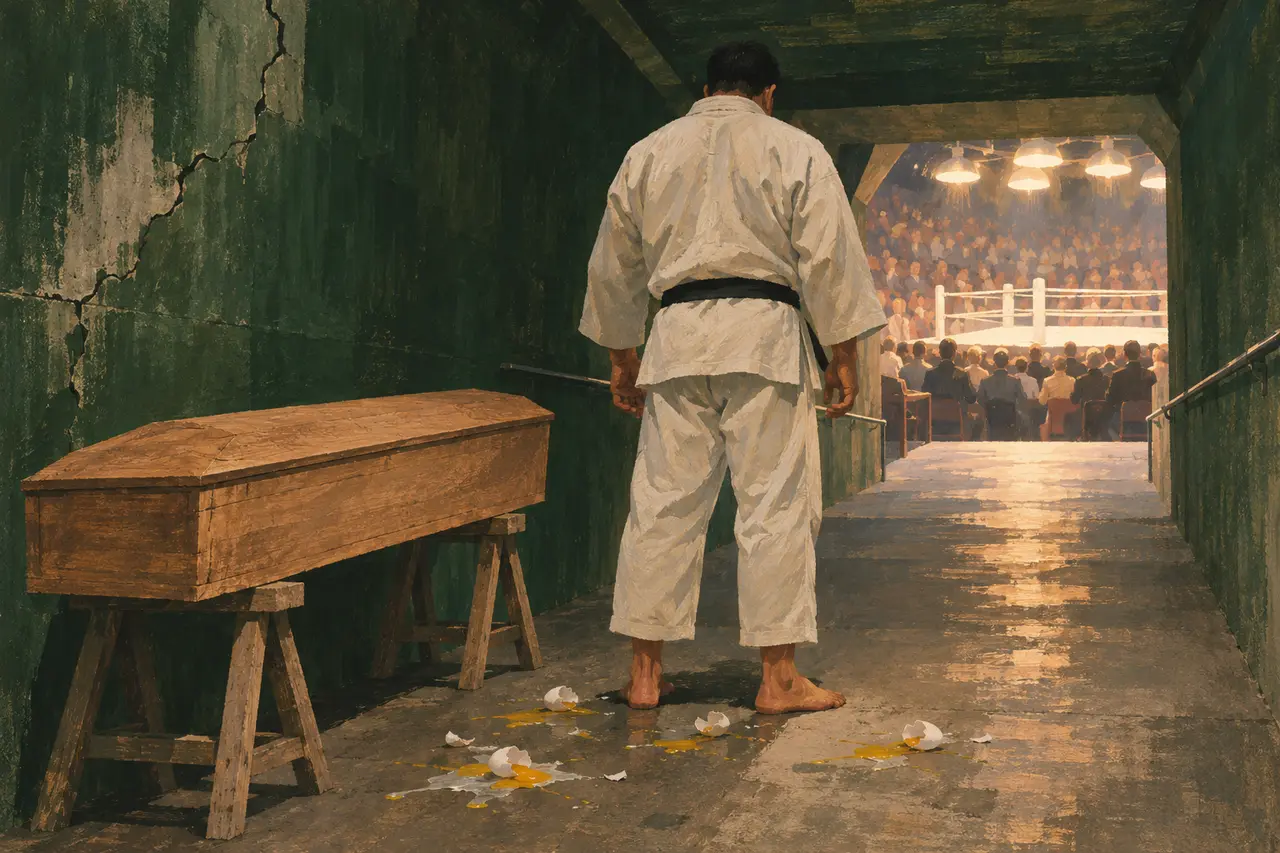
Kato came first, and the accounts split at once. Kimura remembered Kato throwing Hélio again and again, then the two men choking each other on the ground until Kimura shouted for a stop and Kato pitched forward onto the mat. Hélio told the interviewer José Fraguas that he choked Kato unconscious. The Valente brothers, and a 2014 UFC feature, describe two bouts: a draw in Rio and a choke win for Hélio in a São Paulo rematch. Kimura adds a grim piece of theater. Two days after the Kato bout, he says, Hélio’s students paraded a coffin through a city street, announcing that the dead Kato lay inside. [1][3][4][5]
Before the main event, the Valente account has Kimura promising to win “on the first grip,” and Hélio replying that no throw would finish him and that he would not pull guard. His message to the newspapers, as a Graciemag article republished by Lance! relays it, was “Kimura pode quebrar meus ossos, mas não vai quebrar minha moral.” Kimura could break his bones, that is, but not his morale. In a later book by his friend and pupil José Amádio, he put his reason more plainly: “Entrei lá para conhecer meu próprio limite.” He went in to find his own limit. [3][6]
Kimura recalled walking into the stadium and finding a coffin. “This is for Kimura,” he was told, and Hélio had brought it. He wrote that he almost burst out laughing, and that raw eggs were thrown at him as he came to the ring. He also gave the crowd as 20,000, with the president of Brazil among them. The Lance! article names that president as Getúlio Vargas. [1][6]
Rules, weights and the clock
Even the terms come in three versions. Hélio told Fraguas that Kimura, sure of himself, had announced that Hélio would count as the winner if he lasted beyond three minutes; the Valente brothers tell the same story. To the Japanese interviewer Nishi Yoshinori, Hélio described jiu-jitsu rules with no strikes, no points and no time limits, and said Carlos let him fight only if he promised to give up when caught. Kimura’s memoir describes a contest decided by submission alone, where neither a clean throw nor a long pin counted, and it says nothing about a three-minute offer. [1][3][4][7]
The size gap moves too. The Valente piece gives Hélio 139 pounds and Kimura 210. Kimura’s memoir lists Hélio at 180 centimeters and 80 kilograms. Hélio, for his part, told Fraguas that even Kato had been some forty pounds heavier than him. [1][3][4]
What happened on the mat
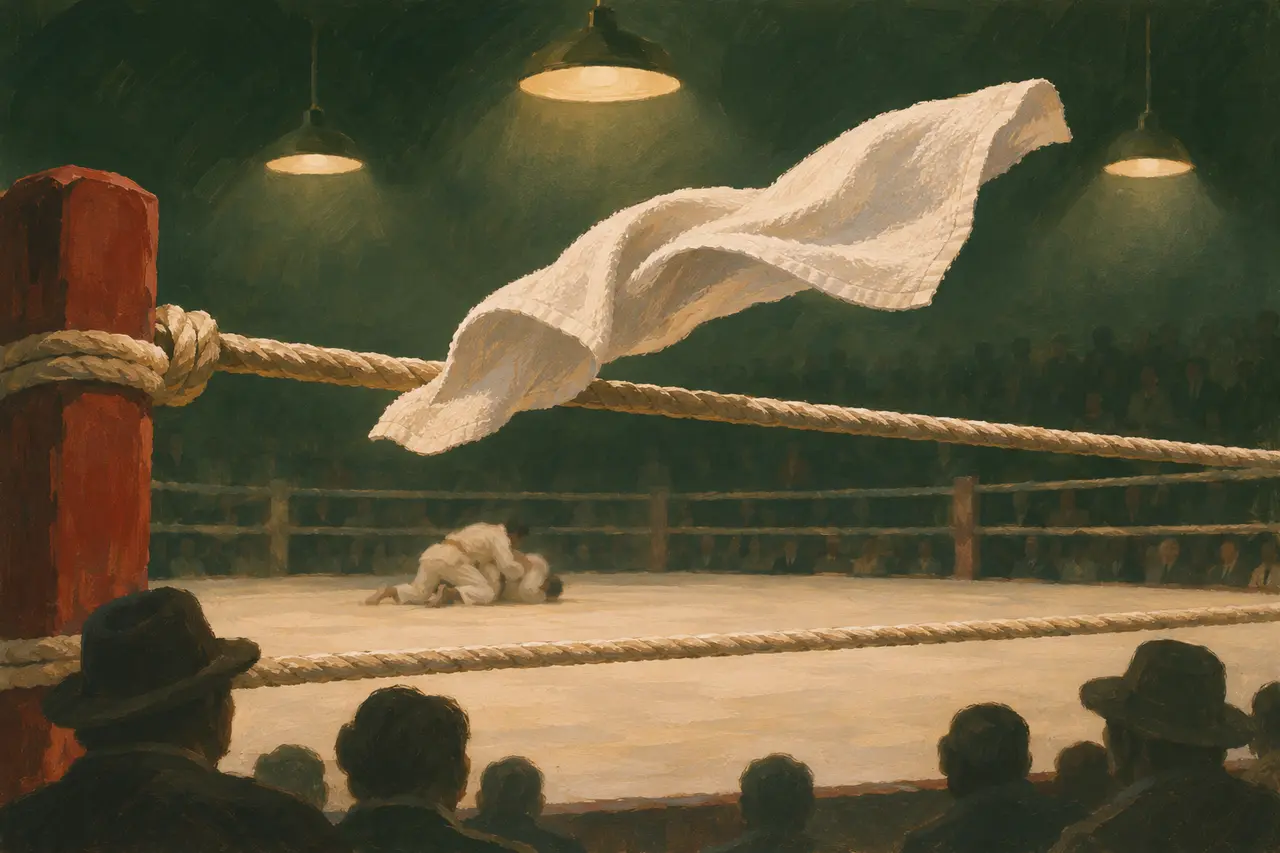
Kimura’s account is the most detailed. He threw Hélio over and over, he wrote, but the mat was too soft for the throws to do damage. Around the ten-minute mark he threw him with o-soto-gari; after a further throw he pinned him, and when Hélio pushed up with his left arm, Kimura caught it in ude-garami, a bent-arm lock. Hélio would not tap. Kimura wrote that the “sound of bone breaking echoed” through the stadium, that he twisted again and broke a second bone, and that a white towel came in as he went to twist once more. He recorded the result as a win by TKO. [1]
Hélio’s own accounts agree with Kimura on the arm lock, and with the other sources on Carlos, and on little else. “I lasted for 13 minutes,” he told Fraguas, and said he was still fighting when Carlos threw the towel for fear the lock would shatter his arm. To Nishi, in an interview recorded in 1994 and published in 2002, he revealed something he said he had never told anyone: Kimura had choked him early, and he believed he had passed out for a moment before the choke was released. He also remembered Kimura saying “good, good” in Japanese into his ear while holding the arm lock, and later explaining, “I was admiring your heart.” The Lance! article places a loss of consciousness during a fall. [4][6][7]
The Valente brothers tell a different ending. The lock came, they write, from north-south, during the third minute of round two. Carlos ran onto the mat and pushed Kimura; the referee wanted the fight to go on because Hélio had not tapped; and Hélio asked him to raise Kimura’s arm rather than overrule his brother. A 2014 study of Brazilian sports journalism by Lise and colleagues cites Ultima Hora, which reported the next day that Kimura had won in the second round. [3][8]
The arm
On the injury, the sources split cleanly. Kimura describes two breaks. Sherdog’s 2013 feature repeats the broken arm, in line with Kimura’s memoir, and the same site’s 2009 obituary of Hélio records an arm injury and Carlos’s towel. The Valente brothers say Hélio’s arm “was not broken,” pointing to the newspapers of the time and to a photograph of Hélio in the shower soon afterward, his left hand resting on his head. Their article names no particular newspaper. [1][2][3][9]
So the sources settle less than the legend. They agree that Kimura was declared the winner. The sources that describe the hold agree it was an arm lock, and Kimura and the Valentes say it was on the left arm. Hélio, the Valentes, Sherdog and Lance! name Carlos as the man who stopped it, while Kimura says only that a towel came in. They do not settle how long it lasted on the clock, whether it was fought in rounds, exactly how it was stopped, or whether a bone broke. The lock itself, according to the Sherdog feature, entered the Gracie repertoire under Kimura’s name. [1][2][3][4][6][8][9]
Afterward, Hélio told Fraguas, Kimura invited him to Japan to teach at his academy, and he declined because he would not leave his family. Decades later, telling Nishi he had taken a samurai spirit from his opponent, he went further: “I might have been Japanese in a previous life.” [4][7]
The accounts side by side
Four questions the tellers answer differently, each in the words of the story above.
| Question | Kimura’s memoir | Hélio Gracie’s interviews | The Valente brothers | Press and later features |
|---|---|---|---|---|
| What were the terms? | Decided by submission alone. Neither a clean throw nor a long pin counted. Nothing about a three-minute offer. [1] | To Fraguas: Kimura announced that Hélio would count as the winner if he lasted beyond three minutes. To Nishi: jiu-jitsu rules with no strikes, no points and no time limits. [4][7] | The same three-minute story. [3] | Nothing quoted in the story |
| How long did it last? | Around the ten-minute mark he threw Hélio with o-soto-gari. A further throw, a pin and the arm lock followed. [1] | “I lasted for 13 minutes.” [4] | The lock came during the third minute of round two. [3] | Sherdog, 2013: about thirteen minutes. Ultima Hora, the next day, as cited by Lise and colleagues: Kimura won in the second round. [2][8] |
| How did it end? | A white towel came in as he went to twist the arm once more. He recorded a win by TKO. [1] | He was still fighting when Carlos threw the towel. [4] | Carlos ran onto the mat and pushed Kimura. The referee wanted the fight to go on; Hélio asked him to raise Kimura’s arm. [3] | Sherdog, in its 2013 feature and its 2009 obituary: Carlos’s towel. Lance! also names Carlos. [2][6][9] |
| Was the arm broken? | Two breaks. The “sound of bone breaking echoed” through the stadium, he wrote. [1] | Does not say whether it broke. To Fraguas, Carlos threw the towel for fear the lock would shatter it. [4] | The arm “was not broken.” They point to the newspapers of the time, naming none, and to a photograph of Hélio in the shower. [3] | Sherdog, 2013: a broken arm. Sherdog’s 2009 obituary: an arm injury. [2][9] |
Sources
- [1] Masahiko Kimura, My Judo, translated excerpt — judoinfo.com. Accessed: 10 November 2026.Used for: Kimura’s account of the weeks before the fight, the fight itself and the arm.
- [2] Mike Whitman, Sherdog, 19 November 2013 — sherdog.com. Accessed: 10 November 2026.Used for: The familiar version of the fight, and the lock entering the Gracie repertoire under Kimura’s name.
- [3] The Valente brothers, Graciemag, first published 2011, reposted 23 January 2018 — graciemag.com. Accessed: 10 November 2026.Used for: The date, the emissary, the three-minute terms, the weights, the second-round ending and the unbroken arm.
- [4] Hélio Gracie interviewed by José Fraguas, Masters Magazine, reprinted 2010 — balancestudios.net. Accessed: 10 November 2026.Used for: Hélio on the bout against Kato and Kato’s weight, the three-minute terms, the thirteen minutes, the towel and the invitation to Japan.
- [5] Fernando Cappelli, UFC, 7 August 2014 — ufc.com. Accessed: 18 October 2026.Used for: The two bouts against Kato.
- [6] Marcelo Dunlop, Graciemag content syndicated by Lance!, 20 October 2018 — lance.com.br. Accessed: 10 November 2026.Used for: Hélio’s message to the newspapers, the line from José Amádio’s book, President Vargas, the fall, and Carlos’s towel.
- [7] Hélio Gracie interviewed by Nishi Yoshinori, Kakuto Striking Spirit, published 1 May 2002, translated by Yoko Kondo — judoinfo.com. Accessed: 10 November 2026.Used for: The rules as Hélio described them, the early choke, what Kimura said during and after the lock, and the samurai spirit.
- [8] Lise et al., 2014 — cev.org.br. Accessed: 18 October 2026.Used for: The Ultima Hora report that Kimura won in the second round.
- [9] Brian Knapp, Sherdog obituary, 2009 — sherdog.com. Accessed: 18 October 2026.Used for: The arm injury and Carlos’s towel.