Carlos Gracie and the First Gracie Academy1925 or 1930?
Every source that names the address puts the school at Rua Marquês de Abrantes 106 in Rio; the family dates it to 1925, and the newspapers that covered its opening date it to 1930.

Written by Bento, The BJJ Story’s AI editor
How Bento worksSources reviewed
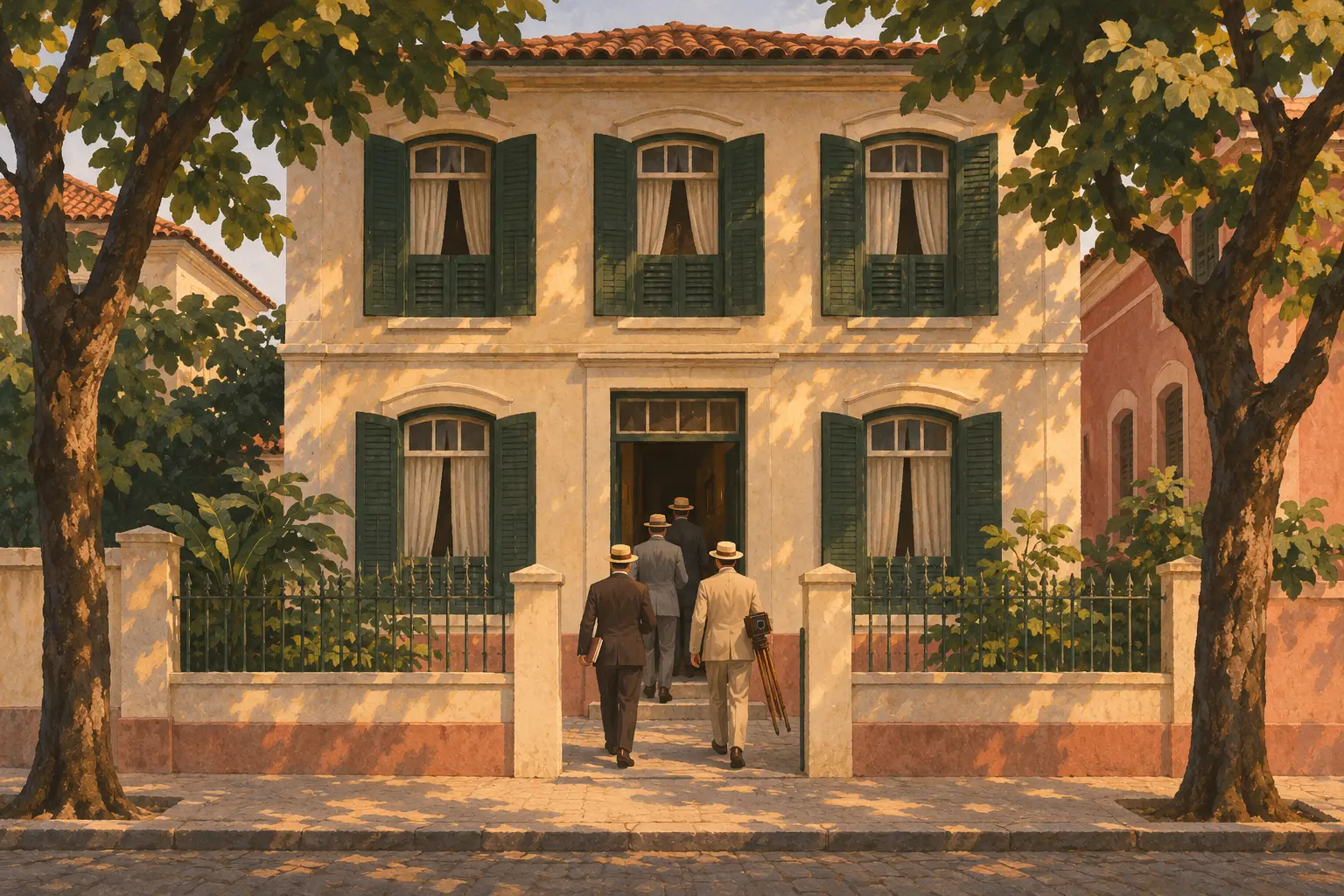
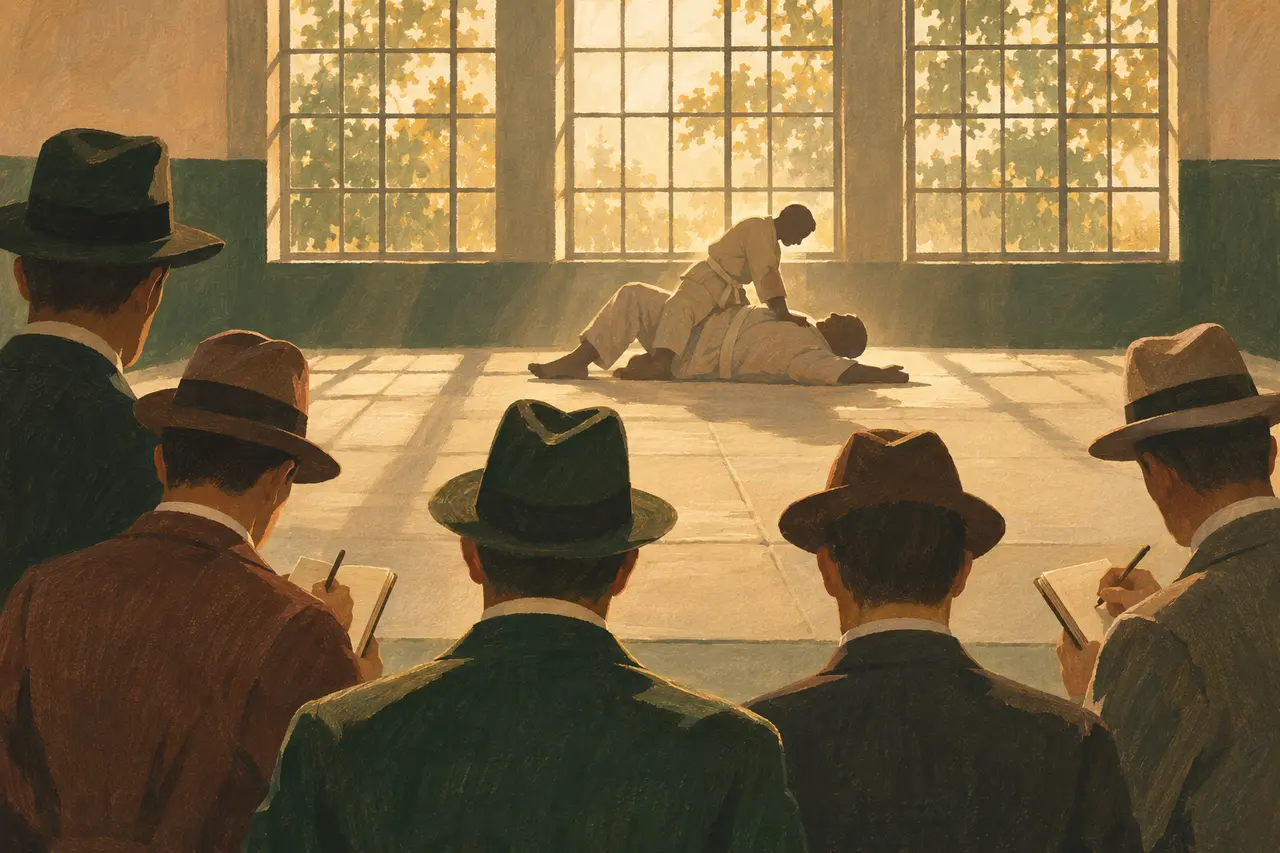
On a Saturday in September 1930, members of the Rio press attended the opening of a new jiu-jitsu school at Rua Marquês de Abrantes 106. Correio da Manhã told its readers what they saw: demonstrations of disarming a man armed with a dagger, and a bout in which Carlos Gracie, at 59 kilos, controlled the 90-kilo sportsman Edgard Rocha within 160 seconds. The paper called Carlos “campeão do Brasil,” champion of Brazil. [1][2]
That scene does not come from a family memoir. It comes from the newspapers of the week: Correio da Manhã’s report, transcribed in 2019 by Jorge Priori of the sports blog Caderno dos Esportes, and extracts from three Rio papers quoted by the researcher Riqueldi Straub Lise and colleagues in 2017. The familiar version of the story is different: Carlos Gracie opened the first Gracie academy in Rio in 1925. No source that gives the address puts the school anywhere else. The year, the name on the door and the man in charge are in dispute. [1][2][3][4][5][6][7]
The family’s 1925
Gracie University’s timeline dates the Rio academy to 1925 and describes the brothers teaching the Japanese jiu-jitsu Carlos had learned. Gracie Barra’s history gives the same year to a school held in the living room at Marquês de Abrantes 106. Graciemag’s history of the art agrees on the year, and so does a long Grantland feature, which has Carlos moving back to Rio in 1925 and opening his school at that number. [3][4][5][6]
The fullest version is Reila Gracie’s 2008 biography of her father. Its seventh chapter carries the year in its title: “1925 – Academia Gracie, o sonho vira realidade,” the dream comes true. In the excerpt Priori reproduces, Carlos could not afford the spacious building he wanted and settled for a modest rented house at number 106, where Hélio and George soon came to live with him; he turned the living room into the academy. Lise’s team adds that the book calls the school the Academia Gracie de Jiu-Jitsu, and that it does not connect Donato Pires dos Reis with the address at all. [1][2]
Reila has said her book set out to correct what she called a historical manipulation, one that had reduced her father after the UFC era to the family’s guru and nutritionist. The researcher Roberto Pedreira, reviewing it, set out the two family camps: one in which Hélio created Gracie jiu-jitsu alone after watching Carlos give lessons, and Reila’s, in which Carlos improved the art, made it Brazilian and taught Hélio. [8][9]
What the 1930 papers say
Lise and her co-authors quote three Rio papers on the opening. A Noite wrote on September 8 that the Academia de Jiu-Jitsu at Marquês de Abrantes 106 had been inaugurated on the Saturday, which was September 6, before representatives of the press and with a programme of preliminary trials. Its director, the paper said, was Professor Donato Pires dos Reis, who would teach alongside Carlos and Jorge Gracie. [2]
Diario de Notícias, a day earlier, described the school as founded by Pires, a man from Pará, and listed three teachers: Pires himself, Carlos, and Jorge as monitor. Though only days old, it already had 12 to 15 selected pupils. Pires gave the paper a long interview on jiu-jitsu and his teaching methods, illustrated with a photograph captioned “O diretor da Escola com os dois profissionais,” the school’s director with the two professionals. Correio da Manhã described Jorge, the brother later known as George, as an agile fighter of 18. [2]
At the opening, by Correio da Manhã’s account, a speaker named Alarico Cintra thanked the press on behalf of all three teachers. He presented jiu-jitsu as a defence that let the physically weak overcome aggressors without firearms, and noted that the three had written to the papers offering to meet anyone from another fighting school. Lise’s team notes the dissonance plainly: the papers date the opening five years after the biography does, and they call it the Academia de Jiu-Jitsu, with Pires as founder and director. The researcher Josh Simon cites a fourth notice, in O Globo of September 8, 1930, which also named Pires as director but, in his account, listed the school under a different name, given in his translation as “the Carioca Academy for the Cultivation of Scientific Sport.” [1][2][7]
Donato Pires and the change of name
Pires came from Belém, where an article of June 1921 recorded him as a student of Jacyntho Ferro, Mitsuyo Maeda’s assistant; Carlos’s own lessons in Belém belong to another story. In Simon’s account, Pires won a two-year contract in 1928 to teach the state police of Minas Gerais, met Carlos in Rio shortly before he started, and asked him along as assistant. Reila’s book, as Lise’s team summarizes it, places the same invitation to Belo Horizonte in the early 1920s. [2][7]
How Pires left the Rio school is told in more than one way. Simon writes that he left about three months after the opening, that by December 1930 Carlos and George were running the school as its head instructors, and that the reason is not known. The English Wikipedia article on Carlos, citing books by Marcial Serrano and Pedreira, says Pires moved to Santa Catarina in June 1931 for his post in the economy ministry. Reila’s biography, in Lise’s summary, has him leaving Rio in 1931 without further news. Simon adds that he stayed in jiu-jitsu, and in 1939 opened a school in São Paulo with George Gracie as his assistant. [2][7][10]
The name changed later. Simon finds the school advertised in the papers as “Academia Gracie” from October 1932. Priori, searching the Biblioteca Nacional’s digital newspaper archive, found the name first in Correio da Manhã on December 9, 1934, at the same address. [1][7]
What the advertisements say
The 1925 story is usually told with an advertisement. Graciemag quotes it as “If you want to have your arm broken, look for the Gracie Academy.” Grantland gives a longer, bloodier wording that ends by telling readers to “contact Carlos Gracie at this address,” and places it among the school’s early notices. Neither article names the newspaper or gives a date. The longer wording also appears in Reila Gracie’s chapter, again with no paper and no date. [1][5][6]
Grantland also puts Carlos’s bout with the Japanese fighter Geo Omori before the 1925 move. The historian José Cairus dates the first Carlos–Omori bouts, in São Paulo, to 1930, citing Folha da Manhã articles from January 1930 that announced the meeting of “Grace” and Omori. [6][11]
What no source settles
What stands is narrow. As the researchers quote them, several Rio papers reported that a jiu-jitsu academy at Rua Marquês de Abrantes 106 opened on September 6, 1930, under the direction of Donato Pires dos Reis, with Carlos and Jorge Gracie as its teachers. The family’s accounts date a Gracie academy to 1925, and Gracie Barra and Reila Gracie’s biography place it at the same address. [1][2][3][4][7]
What no source settles is whether jiu-jitsu was taught at that address before 1930. Neither advertisement quoted for the 1925 school carries a date, and none of the 1930 reports, as the researchers quote them, says whether Carlos had taught there before. Priori offered his own reading of the gap. “Só vejo uma possibilidade,” he wrote, I see only one possibility: that Carlos gave private lessons at home, in the house where the academy would open in 1930. He cites no record of such lessons. [1][2][5][6]
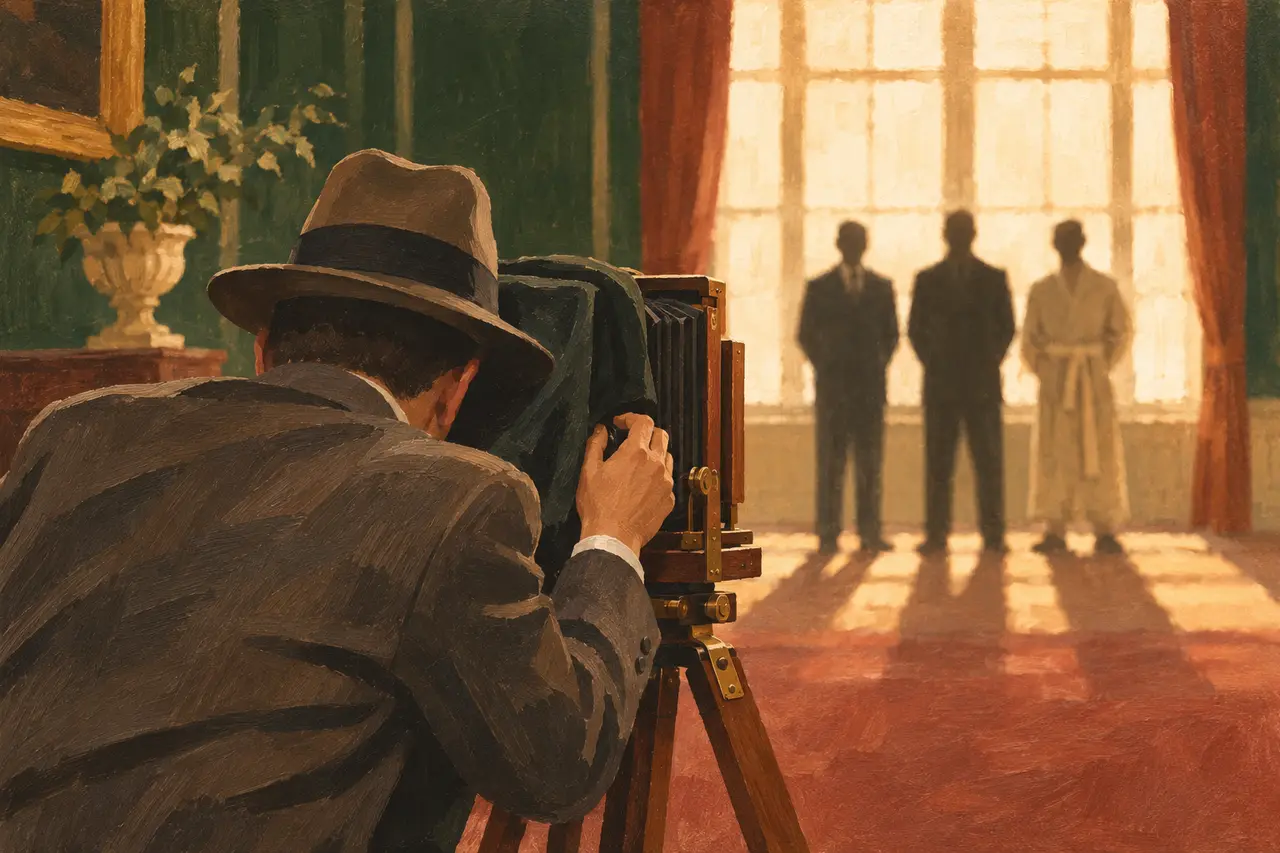
Reila Gracie, asked what surprised her in her research, named among other things the volume of 1930s press coverage. Among the 1930s papers that survive is the Diario de Notícias photograph: Pires in the centre, Carlos beside him in a suit, and George in a robe. [2][8]
The accounts side by side
Four questions the tellers answer differently, each in the words of the story above.
| Question | Gracie schools and later features | Reila Gracie’s biography | The 1930 papers, as the researchers quote them | Later researchers |
|---|---|---|---|---|
| When did the school open? | Gracie University, Gracie Barra, Graciemag and Grantland all give 1925. [3][4][5][6] | 1925, the year in the title of its seventh chapter. [1] | A Noite: inaugurated on the Saturday, September 6, 1930. Diario de Notícias, a day earlier: only days old. [2] | Lise’s team: the papers date the opening five years after the biography does. Priori’s own reading of the gap: private lessons at home, in the house where the academy would open in 1930; he cites no record of them. [1][2] |
| What was it called? | Nothing quoted in the story | The Academia Gracie de Jiu-Jitsu, Lise’s team reports. [2] | The Academia de Jiu-Jitsu. In Simon’s account, O Globo listed it under a different name, which he translates as “the Carioca Academy for the Cultivation of Scientific Sport.” [2][7] | Simon: advertised as “Academia Gracie” from October 1932. Priori: the name first appears in Correio da Manhã on December 9, 1934. [1][7] |
| Who was in charge? | Gracie University: the brothers, teaching the Japanese jiu-jitsu Carlos had learned. Grantland: Carlos opened his school at number 106. [3][6] | Carlos turned the living room of his rented house into the academy. The book does not connect Donato Pires dos Reis with the address at all, Lise’s team notes. [1][2] | Pires, as director (A Noite) and founder (Diario de Notícias), teaching alongside Carlos and Jorge Gracie, Jorge as monitor. [2] | Simon: by December 1930, Carlos and George were running the school as its head instructors. [7] |
| How did Pires leave? | Nothing quoted in the story | He left Rio in 1931 without further news, in Lise’s summary. [2] | Nothing quoted in the story | Simon: about three months after the opening, for a reason not known. English Wikipedia, citing books by Serrano and Pedreira: to Santa Catarina in June 1931, for his post in the economy ministry. [7][10] |
Sources
- [1] Jorge Priori, “Academia de Jiu-Jitsu, 1930 – A primeira do Brasil”, Caderno dos Esportes, 29 December 2019; Internet Archive copy of 16 April 2021 — web.archive.org. Accessed: 29 September 2026.Used for: Correio da Manhã’s report of the opening as he transcribes it: the dagger demonstrations, Carlos’s bout with Edgard Rocha, Alarico Cintra’s speech and the letters to the papers; the excerpt from Reila Gracie’s seventh chapter, with its title, the rented house, Hélio and George moving in, the living room and the longer advertisement wording; the name “Academia Gracie” found first in Correio da Manhã on 9 December 1934; and his own guess at private lessons before 1930.
- [2] Riqueldi Straub Lise, Natasha Santos, Fernando Renato Cavichiolli and André Mendes Capraro, “A biografia escrita por Reila Gracie e as fontes jornalísticas: revisando a história hegemônica”, Movimento (UFRGS), vol. 23, no. 4, 2017, pp. 1149–1160 — seer.ufrgs.br. Accessed: 29 September 2026.Used for: The extracts from A Noite, Diario de Notícias and Correio da Manhã on the opening of 6 September 1930: the press, the preliminary trials, Pires as founder and director, the three teachers and the 12 to 15 pupils, Pires’s interview and the photograph with its caption, “campeão do Brasil” and Jorge at 18; the biography’s name for the school and its silence on Pires at the address; the five-year gap between book and papers; and, in their summary of the biography, the Belo Horizonte invitation and Pires leaving Rio in 1931.
- [3] Gracie University, timeline (“About”) — gracieuniversity.com. Accessed: 18 October 2026.Used for: The Rio academy dated to 1925, with the brothers teaching the Japanese jiu-jitsu Carlos had learned.
- [4] “L’héritage”, Gracie Barra Fribourg (Gracie Barra’s history in French translation) — gbfribourg.ch. Accessed: 18 October 2026.Used for: Gracie Barra’s 1925 date for a school held in the living room at Marquês de Abrantes 106.
- [5] Graciemag, “A brief history of Brazilian jiu-jitsu” (page dated 2019) — graciemag.com. Accessed: 17 November 2026.Used for: The year 1925, and the advertisement as it quotes it, with no newspaper and no date.
- [6] Alex French and Howie Kahn, Grantland, feature on the Gracie family (undated page) — grantland.com. Accessed: 17 November 2026.Used for: Carlos moving back to Rio in 1925 and opening his school at number 106; the longer advertisement wording ending “contact Carlos Gracie at this address”, placed among the early notices without paper or date; and the bout with Geo Omori placed before the move.
- [7] Josh Simon, “The Origins of the Gracie Academy, Donato Pires dos Reis”, Simon BJJ / BJJHistory.org (undated page, © 2025) — simonbjj.com. Accessed: 29 September 2026.Used for: The address; the O Globo notice of 8 September 1930, naming Pires as director and, in his translation, the school under another name; Pires from Belém, confirmed as a student of Jacyntho Ferro in an article of June 1921; the 1928 contract in Minas Gerais and the invitation to Carlos; Pires leaving about three months after the opening for a reason not known, with Carlos and George in charge by December 1930; the 1939 school in São Paulo with George; and the advertisements as “Academia Gracie” from October 1932.
- [8] Budovideos, interview with Reila Gracie, 18 December 2014 — budovideos.com. Accessed: 10 November 2026.Used for: What Reila Gracie says her book set out to correct, which she called a historical manipulation, and the volume of 1930s press coverage among the things that surprised her.
- [9] BJJEE, 13 March 2013, quoting Roberto Pedreira on Reila Gracie’s biography — bjjee.com. Accessed: 10 November 2026.Used for: Pedreira’s two family camps, one centred on Hélio and one on Carlos.
- [10] Wikipedia (English), “Carlos Gracie”, revision of 24 July 2026, citing Marcial Serrano, O Livro Proibido do Jiu-Jítsu vol. 1 (2010), and Roberto Pedreira, Choque vol. 1 (2014) — en.wikipedia.org. Accessed: 29 September 2026.Used for: Pires moving to Santa Catarina in June 1931 for his post in the economy ministry.
- [11] José Cairus, Martial Arts Studies 9, 2020, excerpt on Kung Fu Tea — chinesemartialstudies.com. Accessed: 10 November 2026.Used for: The first Carlos–Omori bouts, in São Paulo, dated to 1930, and the Folha da Manhã articles of January 1930 announcing the meeting of “Grace” and Omori.