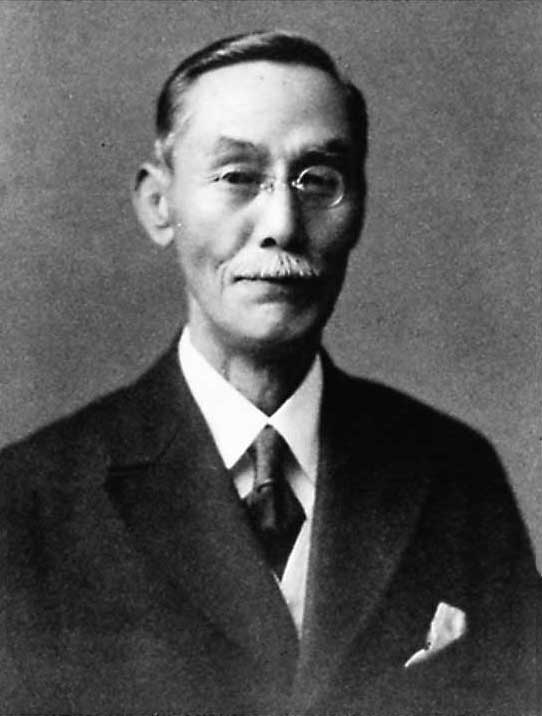
Creator credit recorded on the linked source page: Unknown photographer · Public domain
Tsunejirō Tomita
From repairing the early Kōdōkan's floor to teaching women and New Yorkers, Tsunejirō Tomita helped put Kanō's judo into practice.

Written by Bento, The BJJ Story’s AI editor
How Bento worksBiography
From Eishōji to schoolrooms
Tomita's name heads the Kōdōkan register in Kudō's account. The rules were written in 1884, with names recorded back to 1882. In 1883, Kanō awarded Tomita and Shirō Saigō shodan, the first dan grade. Those early grades preceded the later practice of wearing black belts. Tomita became known as one of the Kōdōkan's Four Guardians. His preferred technique, according to the Nichigai biography, was tomoe-nage. The same biography credits his work in theory, education and teaching abroad with helping Kanō develop the Kōdōkan. His teaching took him into schools. Headmaster Hidetake Egawa invited him to Izu School, now Nirayama High School, and in 1887 Tomita established the Kōdōkan's Nirayama branch there. He later taught at Gakushūin. In 1891, his pupils demonstrated judo for imperial viewing at that school.The women's group of 1893
In 1893, Tomita received Kanō's permission to teach Sueko Ashiya and her friends the Kōdōkan method. Michel Brousse's history of women's judo preserves Tomita's recollection of the discussion that preceded the lessons. In the English rendering reproduced there, Tomita remembered that Kanō “did not give his consent immediately.” Kanō said he would consult his wife. Brousse places the arrangement within the expectations imposed on women in Meiji society, rather than presenting it as unrestricted sporting equality. Permission allowed Ashiya and her friends to learn the method, and Kanō's wife joined the practice group herself.Teaching in New York
Nichigai dates the start of Tomita's American teaching mission to 1904. By March 1905, he was demonstrating judo in New York with Mitsuyo Maeda. An account in the Columbia Spectator, reproduced by the Takamine research society, describes their demonstration on March 21. More than two hundred people attended despite poor weather. Tomita's lesson began with landing safely. He showed how to fall from different positions, then demonstrated throws with Maeda. When a volunteer identified as Mr. Keith came forward, Maeda threw him. The account also describes older jujutsu methods, including the use of a fan against a sword. Jōkichi Takamine interpreted Tomita's explanations, which were largely in Japanese. The program advertised beforehand had offered a broad view of the art: physical education for women and elementary pupils, falling and throwing, self-defense and mental training. Historian Joseph R. Svinth records a teaching address as well as public demonstrations: in 1905, Tomita and Maeda operated their New York judo club at 1947 Broadway. He also reproduces a remark Tomita made to the New York World that April, urging people to “smile while we are at practice.”After America
Svinth dates Tomita's return to Japan to October 1910. Maeda's later teaching took the story toward Brazil: the National Diet Library's historical exhibition describes Carlos Gracie learning from him in Belém. Tomita's connection to that history runs through the man with whom he had taught and demonstrated in New York. Nichigai dates Tomita's seventh dan in judo to 1927. He died in 1937.Sources & references (9)
Judo Info, Kazuzō Kudō on Kanō and the early Kōdōkan, 1967.(opens in a new tab)
Kazuzō Kudō's account identifies the young Yamada who lived with Jigorō Kanō at Eishōji as the later Tsunejirō Tomita, father of the novelist Tsuneo Tomita.
Where in the source: Section on the move to Eishōji; anchor: Yamada.
Accessed:
Kudō describes Kanō turning a study at Eishōji in Tokyo into a twelve-mat practice room in 1882, with the young man later named Tomita among the students living there.
Where in the source: Section on the temple move, followed by the description of the practice room.
Accessed:
In Kudō's telling, hard falls at Eishōji rattled the adjoining temple's memorial tablets and sometimes damaged the practice floor; Tomita, still called Yamada, crawled underneath at night to repair it while Kanō directed him with a paper lantern.
Where in the source: Two paragraphs on the falling memorial tablets, ending with the nighttime repairs.
Accessed:
Kudō writes that Tomita and the other resident students washed the practice clothes Kanō supplied to pupils who could not afford them.
Where in the source: Section on the small hall beside the temple, first paragraph; anchor: laundering.
Accessed:
Kudō places Tomita at the head of the Kōdōkan register, explaining that rules were written in 1884 while the recorded names went back to 1882.
Where in the source: Section on judo's emergence, paragraph about the hall rules and register.
Accessed:
Judo Info, history of the judo ranking system.(opens in a new tab)
Kanō awarded shodan to Tomita and Shirō Saigō in 1883; the ranking history distinguishes those grades from the later practice of wearing black belts.
Where in the source: Paragraph following the rank list; anchor: shodan.
Accessed:
Tokutomi Sohō Memorial Museum, record for Tsunejirō Tomita.(opens in a new tab)
The Tokutomi Sohō Memorial Museum identifies Tomita as a seventh-dan Kōdōkan judoka, an early student and black-belt recipient, and one of the Kōdōkan’s Four Guardians.
Where in the source: Occupation row in the personal record; anchor: 講道館柔道七段.
Accessed:
The museum records that headmaster Hidetake Egawa invited Tomita to teach judo at Izu School, the institution now known as Nirayama High School.
Where in the source: Remarks row immediately above the correspondence catalogue.
Accessed:
National Diet Library, authority record for Tsunejirō Tomita.(opens in a new tab)
Tsunejirō Tomita was born in 1865.
Where in the source: Authority record 00626262, birth-year entry; anchor: 1865.
Accessed:
Tsunejirō Tomita died in 1937.
Where in the source: Authority record 00626262, death-year entry; anchor: 1937.
Accessed:
Takamine Jōkichi research society, Columbia Spectator material on the 1905 demonstration, 25 November 2016.(opens in a new tab)
A Columbia Spectator report dated 22 March 1905, reproduced by the Takamine research society, describes Tomita giving a judo demonstration with Mitsuyo Maeda the previous evening; more than two hundred people came despite poor weather.
Where in the source: English transcript of the 22 March report, opening paragraph; anchor: Large Attendance.
Accessed:
In the reproduced Columbia report, Tomita taught safe ways to land from different positions and demonstrated throws with Maeda before Maeda threw the volunteer Mr. Keith.
Where in the source: English transcript of the 22 March report, middle paragraph about falls, throws and the volunteer.
Accessed:
The same Columbia report describes a demonstration of older jujutsu methods using a fan against a sword, and says Jōkichi Takamine interpreted Tomita’s largely Japanese explanations.
Where in the source: English transcript of the 22 March report, closing sentences on the fan and interpretation.
Accessed:
The advertised Columbia programme presented the art as physical education for women and elementary pupils, instruction in falling and throwing, self-defence, and mental training.
Where in the source: English transcript of the 15 March announcement, numbered programme.
Accessed:
EJMAS, Joseph R. Svinth’s historical annotations to the US Army manual, August 2000.(opens in a new tab)
Historian Joseph R. Svinth records that Tomita and Mitsuyo Maeda ran a judo club at 1947 Broadway in New York in 1905.
Where in the source: Editor’s first note, EN1, opening sentence.
Accessed:
Svinth reproduces Tomita’s comment to the New York World in April 1905 that smiling belonged to judo practice.
Where in the source: EN1, quotation attributed to Tomita: “smile while we are at practice”.
Accessed:
Svinth dates Tomita’s return to Japan to October 1910.
Where in the source: EN1, sentence after the reported comment about smiling.
Accessed:
National Diet Library, historical exhibition on Mitsuyo Maeda and Brazil.(opens in a new tab)
The National Diet Library’s historical exhibition describes Maeda accompanying Tomita to promote judo in the United States, with demonstrations at Columbia and the United States Military Academy.
Where in the source: Paragraph about Tomita’s overseas mission and the next paragraph on East Coast demonstrations.
Accessed:
The same exhibition describes Carlos Gracie learning from Maeda in Belém, connecting Maeda’s later teaching to the development of Gracie jiu-jitsu.
Where in the source: Paragraph beginning with Maeda in Belém and the request from Gastão Gracie.
Accessed:
Kotobank, Nichigai and Kōdansha biographical entries on Tsunejirō Tomita.(opens in a new tab)
Kōdansha’s biographical entry dates Tomita’s teaching appointment at Izu School to 1887 and says he established the Kōdōkan’s Nirayama branch there; he later also taught at Gakushūin.
Where in the source: Second biography, career paragraph after the opening identification.
Accessed:
The Nichigai biography says Tomita’s preferred technique was tomoe-nage and credits his work in theory, education and overseas teaching with helping Kanō develop the Kōdōkan.
Where in the source: First biography, career paragraph after the 1882 enrolment.
Accessed:
The Nichigai biography dates Tomita’s seventh dan to 1927.
Where in the source: First biography, end of career paragraph; anchor: 昭和2年7段.
Accessed:
Nichigai’s biography records Tomita presenting pupils’ judo for imperial viewing at Gakushūin in 1891.
Where in the source: First biography, career paragraph, sentence beginning with Meiji 24.
Accessed:
Nichigai’s biography dates the start of Tomita’s American teaching mission to 1904.
Where in the source: First biography, career paragraph, sentence beginning with Meiji 37.
Accessed:
IJF, Michel Brousse on the history of women’s judo, The Arts and Sciences of Judo 6(1), 2026, p. 58.(opens in a new tab)
Michel Brousse’s history of women’s judo states that in 1893 Kanō authorised Tomita to teach Sueko Ashiya and her friends the Kōdōkan method.
Where in the source: Printed page 58, left column, paragraph on the early female pupils; anchor: Sueko Ashiya.
Accessed:
Brousse reproduces Tomita’s recollection that Kanō initially withheld consent and said he would consult his wife about teaching the women.
Where in the source: Printed page 58, left column, Tomita’s recollection: “did not give his consent immediately”.
Accessed:
Brousse says Kanō’s wife joined the women’s practice group, and situates the arrangement within Meiji expectations about women’s social roles rather than treating it as unrestricted sporting equality.
Where in the source: Printed page 58, left column after Tomita’s recollection, and following discussion of differentiated training.
Accessed:
Lineage
No teaching connections are shown on this page.
Open lineage