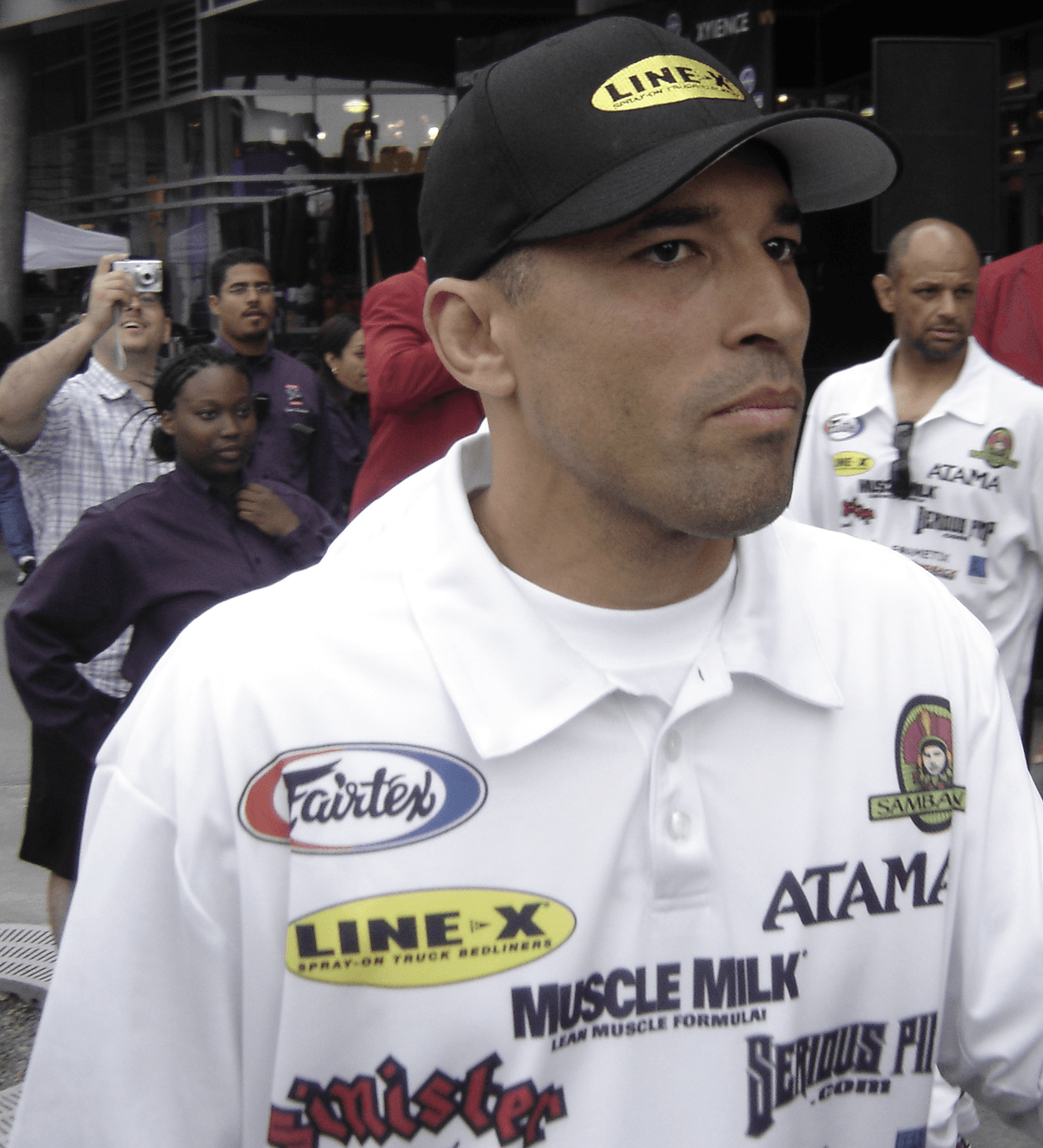
Biography
Royce Gracie (born December 12, 1966, in Rio de Janeiro, Brazil) is widely regarded as the single most important figure in popularizing Brazilian jiu-jitsu worldwide. The son of Helio Gracie, he grew up immersed in the family’s martial art from infancy, training under his father and older brothers Rorion, Relson, Rickson, and Royler.
THE UFC EXPERIMENT
In 1993, Rorion Gracie co-created the Ultimate Fighting Championship as a vehicle to prove the effectiveness of Gracie jiu-jitsu in real combat. The choice of Royce as the family’s representative was a calculated strategic decision. Rickson, considered the family’s best fighter, was physically imposing — choosing him would have undermined the message. Royce, at 176 lbs (80 kg) and with a lean, non-intimidating physique, was the perfect proof of concept: if the smallest, most unassuming Gracie could defeat larger opponents from every discipline, the art itself would be validated.
At UFC 1 (November 12, 1993), Royce submitted Art Jimmerson, Ken Shamrock (rear-naked choke, 0:57), and Gerard Gordeau to win the tournament and collect the $50,000 prize. The event was a cultural earthquake. Martial artists worldwide were forced to reckon with the reality that a smaller grappler could systematically defeat strikers, wrestlers, and judoka.
Royce repeated the feat at UFC 2 (March 1994), submitting all four opponents in a single night, and again at UFC 4 (December 1994), where his 15:49 triangle choke finish of the much larger Dan Severn became one of the most iconic moments in combat sports history.
At UFC 3 (September 1994), Royce defeated Kimo Leopoldo via armbar in a grueling fight but withdrew from the tournament due to exhaustion — the only blemish on his early UFC dominance.
THE SUPERFIGHT AND RIVALRY WITH SHAMROCK
UFC 5 (April 7, 1995) featured the first-ever UFC Superfight Championship bout between Royce and Ken Shamrock. The fight went the full 36 minutes and was declared a draw. The rivalry between the two defined the UFC’s early identity and both men were later inducted as the first UFC Hall of Fame class in 2003.
THE SAKURABA FIGHT
At the PRIDE Grand Prix 2000 (May 1, 2000), Royce faced Japanese pro wrestler Kazushi Sakuraba under special rules requested by the Gracie family: no time limit, no referee stoppage — the fight could only end by submission or knockout. The bout lasted an extraordinary 90 minutes across six 15-minute rounds. Sakuraba’s superior wrestling nullified Royce’s takedowns, and devastating leg kicks progressively damaged Royce’s lead leg. After 90 minutes, with Royce unable to stand, his corner (led by brother Rorion) threw in the towel. It was considered the first major loss by a Gracie in professional fighting in decades, and Sakuraba earned the nickname “The Gracie Hunter.” The fight remains one of the most historically significant bouts in MMA history.
LATER CAREER AND CONTROVERSY
Royce returned to the UFC at UFC 60 (May 27, 2006) against welterweight champion Matt Hughes, losing via TKO in the first round at age 39. The fight underscored how much the sport had evolved since his dominance in the early 1990s.
In June 2007, Royce fought Sakuraba again at a K-1 Dynamite!! event, winning by decision. However, post-fight drug testing revealed elevated levels of nandrolone, an anabolic steroid, at concentrations so high they exceeded the laboratory’s calibration capacity. He was fined $2,500 and suspended until May 2008. This positive test remains a significant controversy and casts a shadow over some of his later-career results.
His final professional fight came at Bellator 149 (February 2016), a TKO victory over longtime rival Ken Shamrock that was itself controversial due to a groin-grazing knee strike visible on replay.
LEGACY
Royce holds a 7th-degree coral belt in Brazilian jiu-jitsu. He was the inaugural UFC Hall of Fame inductee (2003, alongside Shamrock), a Martial Arts History Museum Hall of Fame member (2007), and an International Sports Hall of Fame inductee (2016). He now operates the Royce Gracie Jiu-Jitsu Network with over 30 affiliate academies across the United States.
No single individual did more to introduce Brazilian jiu-jitsu to a global audience. The early UFCs, with Royce as their avatar, forced the entire martial arts world to acknowledge the critical importance of ground fighting — a paradigm shift whose effects are still felt in every MMA gym and BJJ academy on earth today.
Sources: UFC official records; PRIDE Fighting Championships records; California State Athletic Commission (drug test, 2007); Wikipedia (accessed April 2026). The claim that Royce was specifically chosen over Rickson for strategic reasons is widely reported in interviews (including by Rorion Gracie himself) but is primarily based on family testimony rather than independent documentation.