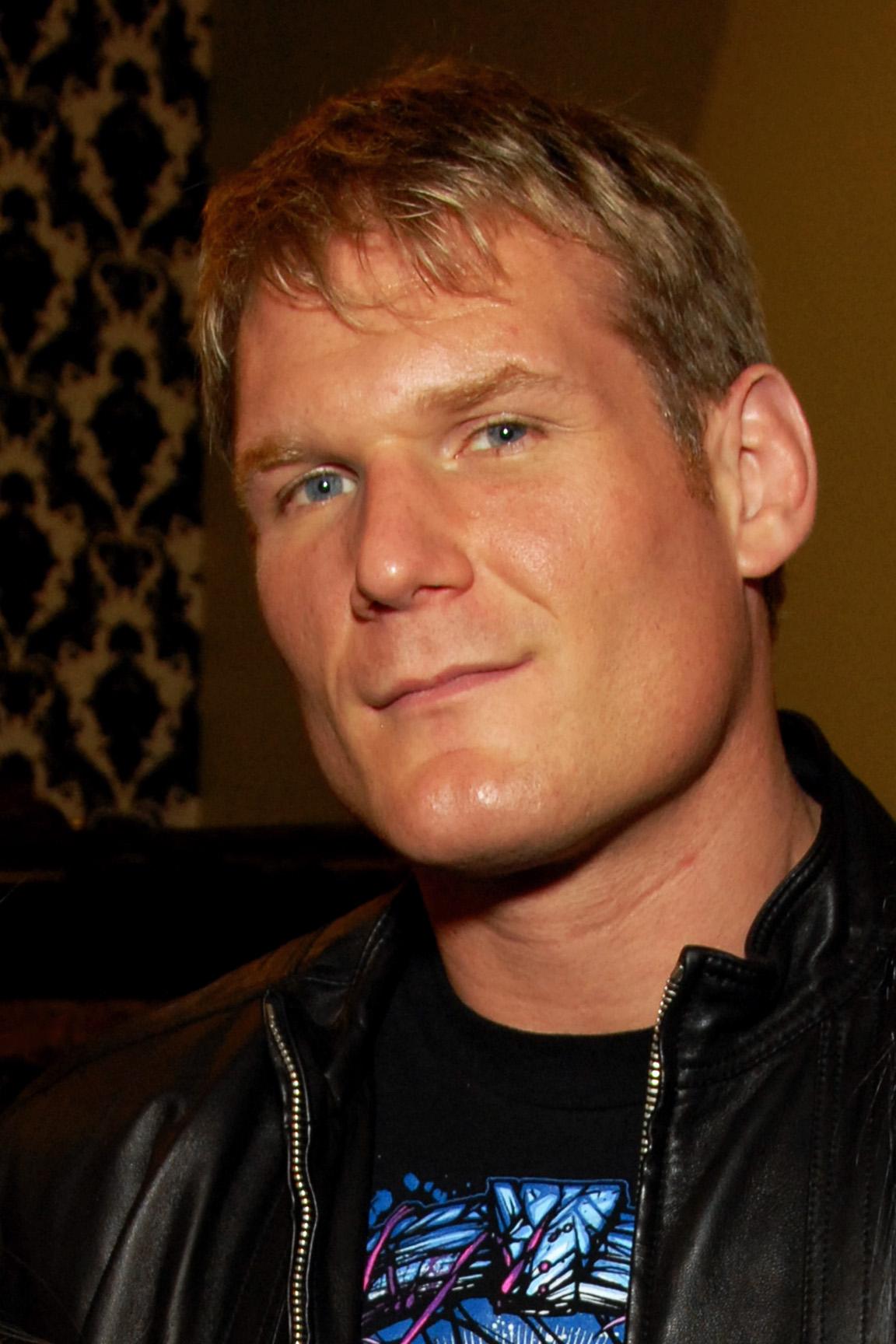
Creator credit recorded on the linked source page: © Glenn Francis, www.PacificProDigital.com · CC BY-SA 3.0 · Modified: see source page
Josh Barnett
“The Warmaster”
Source: joshbarnett.comJosh “The Warmaster” Barnett carried catch wrestling into UFC and no-gi competition, then developed fighters through demanding, adaptable coaching.

Written by Bento, The BJJ Story’s AI editor
How Bento worksBiography
Sources & references (11)
Josh Barnett, official Warmaster biography by Alex Milas and named training qualifications, undated.(opens in a new tab)
Josh Barnett holds a Brazilian jiu-jitsu black belt in Erik Paulson’s lineage.
Where in the source: Accolades, final BJJ black-belt qualification naming Erik Paulson and Rigan Machado.
Accessed:
He uses the nickname The Warmaster, taken from a song by the British metal band Bolt Thrower.
Where in the source: Named heading and complete nickname-origin paragraph.
Accessed:
His official biography lists him as a full Combat Submission Wrestling instructor under Erik Paulson and a certified Pancrase Hybrid Wrestling instructor.
Where in the source: Complete two instructor qualifications in Accolades.
Accessed:
MMA Fighting, Ben Fowlkes, reported profile and first-person interviews with Josh Barnett and Jim Harrison, 10 September 2011.(opens in a new tab)
As a University of Montana student, he knew he wanted to fight after watching UFC 4 but had not settled on another direction for his studies.
Where in the source: Opening Barnett answer about college and seeing UFC 4.
Accessed:
He had wrestled and tried kickboxing before moving from Washington to Missoula, where he looked for people serious about fighting.
Where in the source: Complete early-background paragraph before Harrison’s first answer.
Accessed:
He began training with Jim Harrison at Sakura Warrior Arts in 1996.
Where in the source: Article’s named gym and explicit 1996 meeting passages.
Accessed:
Harrison recalled that Barnett, unable to afford classes, offered to mow grass and clean the gym in exchange for training.
Where in the source: Harrison’s complete recollection of their first meeting after his own background.
Accessed:
While home for winter break, Barnett got his first MMA fight through AMC Pankration and won by rear-naked choke.
Where in the source: Complete return-to-Washington and first-bout paragraph.
Accessed:
Harrison urged him to train alongside professionals and recommended Matt Hume and Maurice Smith in Seattle; Barnett followed that advice.
Where in the source: Complete crossroads paragraph and Barnett’s following explanation.
Accessed:
Barnett later credited Harrison with shaping his focus and approach to training, and they reunited when he returned to Missoula.
Where in the source: Complete mentality answer and later reunion passage.
Accessed:
UFC, Jordan Newmark, first-person career and catch-wrestling interview with Josh Barnett, 10 January 2013.(opens in a new tab)
He traced his catch-wrestling education to Hume’s AMC Pankration and the submission style Hume had learned through Pancrase.
Where in the source: Complete first catch-wrestling answer after the Nogueira context.
Accessed:
He liked its aggressive wrestling base and broad range of submissions because it suited his existing wrestling background.
Where in the source: Same complete catch-style answer.
Accessed:
He won the UFC heavyweight title from Randy Couture at UFC 36 in 2002.
Where in the source: Early career paragraph identifying the title-winning bout and its anniversary.
Accessed:
In 2006 he and Antonio Rodrigo Nogueira split two close decisions in PRIDE, first in the Grand Prix semifinal and then in the year-end rematch.
Where in the source: Complete description of the two 2006 meetings and their split outcomes.
Accessed:
He reached the Strikeforce heavyweight Grand Prix final after submitting Brett Rogers and Sergei Kharitonov with arm-triangle chokes.
Where in the source: Complete Strikeforce route-to-final paragraph.
Accessed:
Daniel Cormier beat him by unanimous decision over five rounds in that final in 2012.
Where in the source: Full Grand Prix final recap and following 2012 context.
Accessed:
Barnett said an early hand injury disrupted his plan in the Cormier bout and described reviewing the fight as a way to improve.
Where in the source: Complete first-person final-fight explanation and later answer on learning from the data.
Accessed:
UFC, official UFC 164 main-card report, Frank Mir against Josh Barnett, 31 August 2013.(opens in a new tab)
In August 2013 he returned to the UFC for his first appearance there since 2002 and stopped Frank Mir in the first round.
Where in the source: Complete Frank Mir vs Josh Barnett section, stoppage and first-UFC-appearance-since-2002 sentence.
Accessed:
IBJJF, official World Jiu-Jitsu No-Gi Championship 2009 podium results, Adult / Black / Male / Ultra Heavy.(opens in a new tab)
At the 2009 IBJJF World No-Gi Championship, Barnett placed first in Adult / Black / Male / Ultra Heavy, representing CSW.
Where in the source: Complete original Adult / Black / Male / Ultra Heavy podium: first Josh Barnett / csw; second Bruno Paulista / Ralph Gracie; third Tom DeBlass / Renzo Gracie and Asa Fuller / Gracie Humaita.
Accessed:
MMA Fighting, Luke Thomas, original published Technique Talk interview transcript with Josh Barnett, 7 September 2014.(opens in a new tab)
At Metamoris 4 in August 2014 he submitted Dean Lister.
Where in the source: Original interview introduction and complete opening Metamoris questions.
Accessed:
He explained the finish as an adaptation of a wrestling head-and-arm ride, using sustained control and pressure rather than treating the position only as a pin.
Where in the source: Complete answer naming the final hold and following explanation of first learning to ride and pin.
Accessed:
He emphasised that effective pressure depends on positioning and how weight is applied, not only on the grappler’s body size.
Where in the source: Complete answer to whether catch is a big-man’s sport.
Accessed:
He said jiu-jitsu had added ideas for working from his back, while he still tried to impose his own style when competing under its rules.
Where in the source: Complete answer on what BJJ added to his overall grappling.
Accessed:
He distinguished the strategies required by catch rules with pins from those used in a jiu-jitsu tournament, particularly around standing wrestling and top control.
Where in the source: Complete answer comparing how his game would look in the two sports.
Accessed:
In 2014 he identified limited competition opportunities and too few experienced instructors as obstacles to catch wrestling’s growth.
Where in the source: Complete answer on the sport’s health and instructor/competition environment.
Accessed:
He argued that growth needed qualified coaches, links with existing wrestling communities and regional-to-world competition structures.
Where in the source: Complete final question and infrastructure answer.
Accessed:
He encouraged his students to test themselves under other available grappling rules and to learn unfamiliar arts rather than wait for a favourable environment.
Where in the source: Complete answer about his students entering other tournaments and later advice to curious practitioners.
Accessed:
He identified Victor Henry as one of his lighter-weight catch fighters and Satoshi Ishii as a student who trained catch with him in the United States for MMA.
Where in the source: Complete big-man-sport answer and later answer naming Ishii.
Accessed:
UFC, Steve Latrell, first-person interview with Victor Henry about his development and coach Josh Barnett, 20 January 2022.(opens in a new tab)
Before his UFC debut in 2022, Henry described Barnett as his mentor and a direct, demanding coach who expected him to adapt during difficult situations.
Where in the source: Complete named coach section of Henry’s first-person interview.
Accessed:
UFC, Kevin Schuster, first-person interview with Victor Henry about coaching and his next career step, 1 November 2024.(opens in a new tab)
Henry credited a Barnett-designed game plan with helping him stop Rani Yahya in April 2024.
Where in the source: Complete opening result and game-plan paragraphs of the 2024 interview.
Accessed:
Later that year Henry followed Barnett to Japan to help develop other fighters while preparing for his own next bout.
Where in the source: Complete paragraph following Henry’s answer on specialised opponents.
Accessed:
Josh Barnett, official Bootcamp and instructional-material page, undated.(opens in a new tab)
His Bootcamp page offers instructional material titled Championship Level Catch Wrestling and links to his Jiu-Jitsu Magazine sessions.
Where in the source: Full Bootcamp main text, product title, Buy Now and playlist description.
Accessed:
Josh Barnett, official Bloodsport project page, undated.(opens in a new tab)
He also presents Bloodsport on his website as a project combining MMA and professional wrestling, with links to past shows.
Where in the source: Full Bloodsport project page, Past Bloodsports and The Ultimate Hybrid sections.
Accessed:
UFC, Thomas Gerbasi, original Hamburg main-event report, Josh Barnett against Andrei Arlovski, 3 September 2016.(opens in a new tab)
In September 2016 he submitted Andrei Arlovski with a rear-naked choke in the third round of their UFC Hamburg main event.
Where in the source: Complete named main-event report, final sequence and result.
Accessed:
Lineage
No teaching connections are shown on this page.
Open lineage