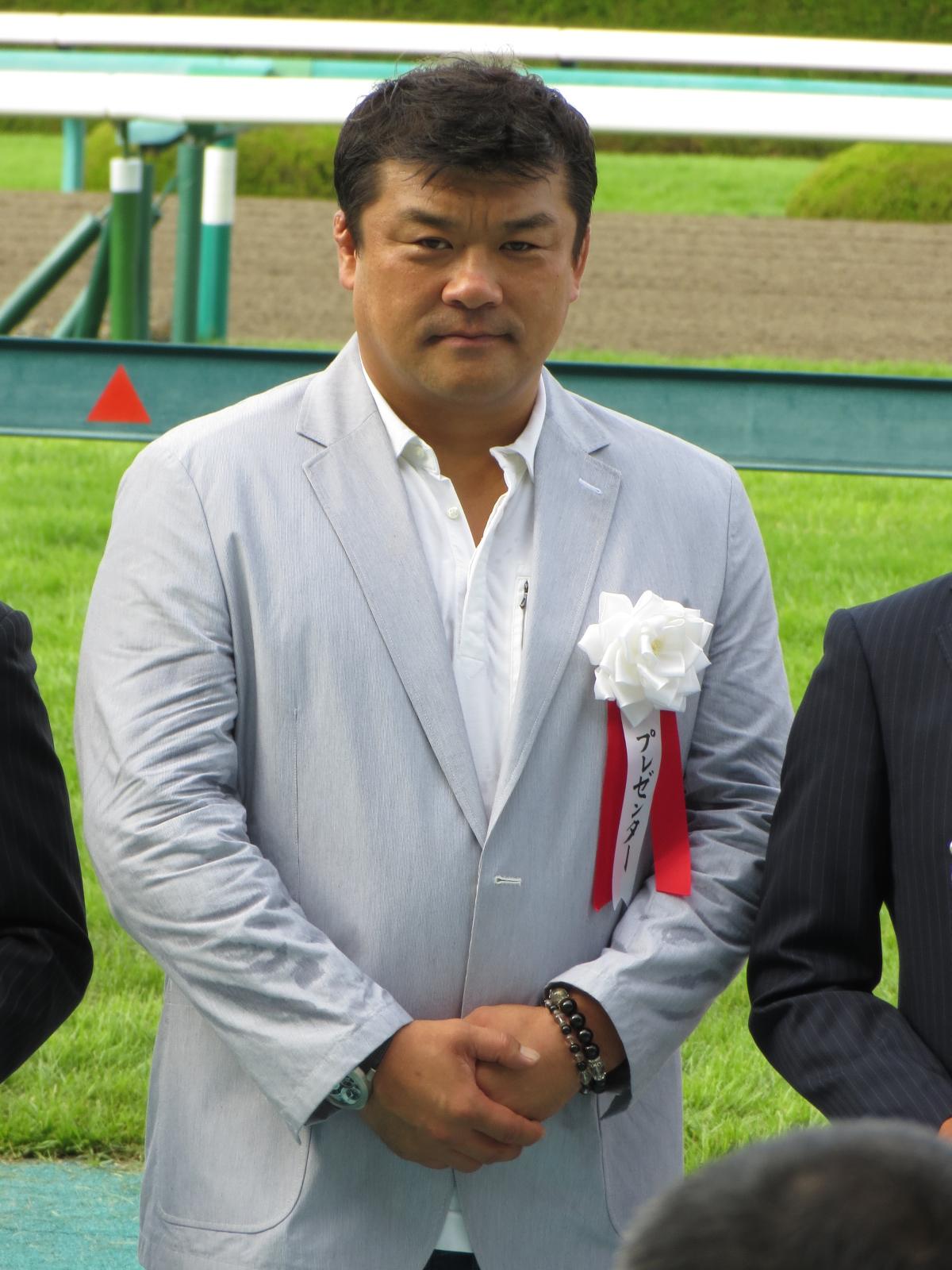
Creator credit recorded on the linked source page: Ogiyoshisan · CC BY-SA 3.0
Hidehiko Yoshida
Olympic judoka Hidehiko Yoshida carried his throws into submission fighting, adapted his groundwork and taught children, adults and a future opponent.

Written by Bento, The BJJ Story’s AI editor
How Bento worksBiography
Grip and pace
Yoshida had won Olympic gold in Barcelona in 1992, in the men's under-78 kg division. Recalling the final in a 2025 interview with the International Judo Federation, he described a confidence built through preparation: securing his grip meant he believed the throw would follow. “I wasn’t in a rush,” he said. He also remembered the attention and expectations that came with the medal, and linked the opportunities it created to his later coaching work. His decision to face Gracie came with less certainty about what would follow. At the announcement in July 2002, Yoshida described a single engagement, leaving further professional appearances undecided. After hesitating over the move into professional competition, he had accepted in the hope of introducing more people to judo. In his pre-fight PRIDE interview, he described studying recordings of Gracie, including the bout with Kazushi Sakuraba. Judo remained central to his preparation, but he wanted to learn how sleeves and trousers might assist submission attacks, holds intended to make an opponent give up. His intended route was a throw, then mount, a position astride the opponent's torso, followed by a choke or joint lock. The transition had to happen “at my own pace,” he stressed. He explained the adjustment through the ending he was seeking: a throw could settle a judo contest, whereas he expected this encounter to continue until a submission. Gracie's legs posed another problem, for attacks and defense alike. “I’ve got short legs,” Yoshida remarked while assessing the difference in their proportions.A trapped leg
Looking back on the encounter in his August 31 interview, Yoshida said he had struggled to judge how much preparation this unfamiliar opponent required. He had pushed his striking and judo work, but the opponent presented something new. He expected Gracie to draw him down from a clinch; the exchanges involving leg locks still felt unfamiliar. His arm-lock attempt stopped because a leg remained trapped, he explained. He changed course, bringing a hand behind Gracie's head while pursuing a choke. Asked about sleeve chokes, he played down his earlier groundwork and described practicing several choking techniques for the match. “My training period was too short,” he said. He wanted more techniques, further physical preparation and time to understand the different rhythm and duration of this kind of encounter. His later mixed martial arts bouts brought further submission finishes. UFC's retrospective on PRIDE submissions identifies an Ezekiel choke, a choke commonly applied using a sleeve grip, in his finish against Kiyoshi Tamura at Total Elimination 2003. Against Tank Abbott at Final Conflict 2005, the recorded finish was a single-wing choke. These were submissions in MMA bouts, where grappling formed part of a contest that also permitted striking.The dojo between bouts
Teaching ran alongside the change in competition. Yoshida had coached Meiji University's judo team from 1997 to 2002. In the preface excerpt published with his 2013 book, he recalled leaving Nippon Steel and the university coaching post in 2002 to open Yoshida Dojo. He also started VIVA JUDO!, offering introductory judo sessions free of charge. He explained both the dojo and the outreach work through a wish to give something back to the sport that had brought him up. The daily work appears in his August 31, 2002 interview. Describing the previous day, Yoshida said he had reached his dojo around 2 p.m., done a little training and taught classes for children and adults, staying until about 9 p.m.Retirement and coaching
By his retirement bout in 2010, one of the people sharing that training life had become his opponent. Yoshida and Kazuhiro Nakamura had trained at the same dojo since 2002. Announcing their match, Yoshida presented it as an opportunity to pass on what he had learned. Nakamura spoke of overcoming the teacher who stood in his way. Ahead of the bout, Nikkan Sports reported that Yoshida planned to train separately from Nakamura at Tsuyoshi Kohsaka's dojo. The match took place at ASTRA in Tokyo's Nippon Budokan on April 25, 2010. Nikkan Sports reported that Yoshida began wearing a judogi, the judo jacket and trousers, then removed it for the third round. Tiring late in the bout, he resisted two armbar attempts, attacks that seek to straighten the elbow beyond its normal range. Nakamura won by unanimous decision. Afterward, Yoshida announced his intention to return to judo and put on a white judogi for the ceremony. The chronology accompanying his book dates his appointment as Park24's judo coach to 2011 and the establishment of his Viva Sports Club nonprofit to 2012. Park24 later announced a change in his responsibilities, moving him from team coach to general director effective April 1, 2017.Sources & references (9)
Daisan Kikaku, Yoshida book description and preface excerpt, 3 October 2013.(opens in a new tab)
Hidehiko Yoshida was born in 1969.
Where in the source: Author biography, opening year entry: “1969年”.
Accessed:
In the preface excerpt published with his book, Yoshida said that in 2002 he left Nippon Steel, stepped down as Meiji University’s judo coach and opened Yoshida Dojo.
Where in the source: Preface excerpt under the main-content heading, sentence about the 2002 transition; anchor: “2002年”.
Accessed:
The book’s author chronology places Yoshida’s tenure coaching Meiji University’s judo team between 1997 and 2002.
Where in the source: Author chronology, coaching-tenure entry: “1997年~2002年”.
Accessed:
Yoshida’s published preface explained that he also launched free introductory judo sessions called VIVA JUDO!, describing his dojo and outreach work as a way to repay the sport that had raised him.
Where in the source: Preface excerpt, passage after the dojo opening; anchor: “VIVA JUDO!”.
Accessed:
The author chronology dates Yoshida’s appointment as Park24’s judo coach to 2011 and the establishment of his Viva Sports Club nonprofit to 2012.
Where in the source: Final two entries of the author chronology; anchors: “2011年”, “2012年”.
Accessed:
International Judo Federation, Jo Crowley interview with Yoshida, 28 February 2025.(opens in a new tab)
Yoshida won the men’s under-78 kg judo gold medal at the 1992 Barcelona Olympics.
Where in the source: Opening introduction names the champion and weight category; anchor: “Barcelona”.
Accessed:
Looking back in 2025, Yoshida attributed his Olympic confidence to preparation: once he secured his grip, he believed he could complete his throw.
Where in the source: Answer to the question about winning the final; anchor: “first grip”.
Accessed:
In his 2025 IJF interview, Yoshida described the calm he felt after establishing his grip in the Olympic final.
Where in the source: Answer about the final: “I wasn’t in a rush”.
Accessed:
Yoshida recalled that Olympic victory brought public attention and expectations; he also connected the opportunities it opened with becoming a coach and starting the Park24 judo club.
Where in the source: Closing answers about the consequences of Olympic success; anchor: “Park 24”.
Accessed:
Park24, judo coaching appointments, 29 March 2017.(opens in a new tab)
Park24 announced that Yoshida would move from judo team coach to general director on 1 April 2017.
Where in the source: Appointment announcement, effective-date paragraph and first staff row; anchor: “総監督”.
Accessed:
BoutReview, Yoshinori Ihara report from the Yoshida–Gracie press conference, July 2002.(opens in a new tab)
BoutReview’s July 2002 press-conference report said that Yoshida accepted the Royce Gracie match after initially hesitating about professional competition, hoping it would help more people discover judo.
Where in the source: Opening July 16 conference block, paragraph explaining his decision; anchor: “柔道を多くの人に”.
Accessed:
At the July 2002 announcement, Yoshida treated the proposed Gracie appearance as a single engagement and said he had not decided what would follow.
Where in the source: Opening conference block, paragraph about future professional appearances; anchor: “とりあえず単発”.
Accessed:
Judo Info, reproduced PRIDE interview with Yoshida, 16 July 2002.(opens in a new tab)
Before meeting Royce Gracie, Yoshida told PRIDE that switching from tatami to a ring unsettled him: he wondered about the surface’s hardness and slipperiness.
Where in the source: First question about turning professional; anchor: “slippery”.
Accessed:
Yoshida said he was studying commercial recordings of Gracie, including the match against Sakuraba, while initially keeping judo at the centre of his preparation.
Where in the source: Consecutive answers about preparation and opponent recordings; anchor: “videos”.
Accessed:
Yoshida identified a rule adjustment he had to make: a throw could settle his judo contests, but he expected this encounter to require a submission.
Where in the source: Answer comparing the two sports; anchor: “gives up”.
Accessed:
His stated plan was to turn a throw into top control, seek mount and finish with a choke or joint lock rather than let Gracie dictate the exchange.
Where in the source: Answers on defeating Gracie and obtaining top position; anchor: “mount”.
Accessed:
In the July PRIDE interview, Yoshida repeatedly stressed that he wanted to control the speed of his transition from throws to groundwork.
Where in the source: Answer on the intended transition: “at my own pace”.
Accessed:
After reviewing Gracie’s recordings, Yoshida said he wanted to examine how the jacket and trousers could be used in submission attacks.
Where in the source: Answer about what he noticed in the recordings; anchor: “sleeves”.
Accessed:
Assessing Gracie’s reach and ability to attack or defend with his legs, Yoshida contrasted his own proportions in the July interview.
Where in the source: Answer about their face-off: “I’ve got short legs”.
Accessed:
Judo Info, reproduced PRIDE interview with Yoshida, 31 August 2002.(opens in a new tab)
In the August 31 PRIDE interview, Yoshida said that the previous day he had returned to his dojo around 2 p.m., trained lightly and taught both children’s and adults’ classes until about 9 p.m.
Where in the source: Opening answer about how he felt after the event; anchors: “2pm”, “9pm”.
Accessed:
Reviewing his preparation, Yoshida said the unfamiliarity of this kind of opponent made it difficult to judge how much training was enough, so he pushed both striking and judo practice.
Where in the source: Answer on whether final preparations went well; anchor: “different world”.
Accessed:
Yoshida said he had prepared for Gracie to pull him into groundwork from the clinch, but still found the leg-lock exchanges unfamiliar.
Where in the source: Answers on the expected fight pattern and staying calm; anchor: “leg locks”.
Accessed:
He described abandoning an arm-lock attempt because a leg remained caught, then reaching behind Gracie’s head as he worked towards a choke.
Where in the source: Answer about the transition from side control and the attempted arm lock; anchor: “still stuck”.
Accessed:
Asked about sleeve chokes, Yoshida downplayed his earlier groundwork and said that the match preparations had led him to practise several choking techniques.
Where in the source: Answer on practising sleeve chokes in his judo career; anchor: “many other chokes”.
Accessed:
After the Gracie encounter, Yoshida said he needed more techniques, further physical preparation and a better understanding of the different feel and duration of this kind of fight.
Where in the source: Last answer, discussion of future preparation; anchor: “practice and study”.
Accessed:
In the August 31 PRIDE interview, Yoshida assessed the preparation time he had been given as inadequate.
Where in the source: Last answer: “My training period was too short”.
Accessed:
UFC, Walker Van Wey retrospective on PRIDE submissions, 6 April 2020.(opens in a new tab)
UFC’s 2020 retrospective identifies Yoshida’s finish of Kiyoshi Tamura at PRIDE Total Elimination 2003 as an Ezekiel choke.
Where in the source: Tamura subsection and submission label; anchor: “Ezekiel choke”.
Accessed:
The same UFC retrospective identifies a single-wing choke as Yoshida’s submission against Tank Abbott at PRIDE Final Conflict 2005.
Where in the source: Abbott subsection and submission label; anchor: “Single-wing choke”.
Accessed:
Nikkan Sports, Eiji Fujinaka report on Yoshida’s retirement opponent, 2 April 2010.(opens in a new tab)
In April 2010, Nikkan Sports reported that Yoshida and Kazuhiro Nakamura had trained in the same dojo since 2002, and that Nakamura had been chosen for Yoshida’s retirement match.
Where in the source: Main article, opponent announcement followed by closing paragraph about shared training; anchor: “02年から”.
Accessed:
Yoshida told the retirement-match press conference that facing Nakamura would let him pass on what he had learned; Nakamura described his teacher as a major obstacle he now intended to overcome.
Where in the source: Separate attributed statements by Yoshida and Nakamura; anchor: “ボクの持っているすべて”.
Accessed:
Before the retirement match, Nikkan Sports reported that Yoshida planned to train at Tsuyoshi Kohsaka’s dojo, apart from Nakamura.
Where in the source: Closing paragraph on separating for training; anchor: “高阪剛氏の道場”.
Accessed:
Nikkan Sports, Eiji Fujinaka report on Yoshida’s final fight, 26 April 2010.(opens in a new tab)
Nikkan Sports reported that Yoshida’s final fight took place against Nakamura at ASTRA in Tokyo’s Nippon Budokan on 25 April 2010 and ended in a unanimous decision defeat.
Where in the source: Event line and opening bout account; anchor: “0-3”.
Accessed:
The retirement report described Yoshida starting in a judogi, removing it for the third round, and resisting two late armbar attempts as he tired.
Where in the source: Opening and middle bout-description paragraphs; anchor: “3回”.
Accessed:
After his final MMA fight, Yoshida announced that he intended to return to judo, and the report described him putting on a white judogi for that next chapter.
Where in the source: Closing paragraph describing the ceremony and return; anchor: “純白の柔道着”.
Accessed:
Lineage
No teaching connections are shown on this page.
Open lineage