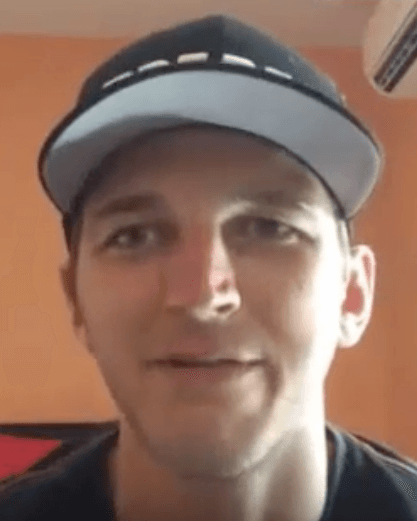
Creator credit recorded on the linked source page: Fight Bros NZ · CC BY 3.0 · Modified: see source page
Dan Hooker
“The Hangman”
Source: ufc.comDan “The Hangman” Hooker's UFC career runs alongside teaching, mentorship and repeated changes in weight, preparation and ambition.

Written by Bento, The BJJ Story’s AI editor
How Bento worksBiography
Sources & references (9)
1News, Faleatua Malili, report and interview on Hooker teaching at Combat Academy while competing in the UFC, 10 August 2018.(opens in a new tab)
Dan Hooker is a New Zealand mixed martial artist.
Where in the source: Opening description of the named New Zealand fighter.
Accessed:
By August 2018 he had opened Combat Academy in Ellerslie, Auckland, while continuing to train at City Kickboxing.
Where in the source: Complete main report, gym-opening and dual-role passages.
Accessed:
He described being the head coach at his academy but an ordinary student on the mat at City Kickboxing, wanting to pass current competition experience to pupils while still learning.
Where in the source: His paired statements on being a coach at Combat Academy and a student at City Kickboxing.
Accessed:
UFC, Dan Hooker, official athlete page, biography and actually opened Fighter Facts, UFC History and Q&A tabs, read 9 November 2026.(opens in a new tab)
He fights under the nickname The Hangman.
Where in the source: Main athlete heading and Fighter Facts, origin-of-nickname answer.
Accessed:
UFC lists Auckland, New Zealand, as his place of birth.
Where in the source: BIO tab, Place of Birth field, printed as Aukland, New Zealand.
Accessed:
Before fighting professionally he worked as a doorman in Auckland’s central business district.
Where in the source: Actually opened Q&A tab, answer about his previous job.
Accessed:
His UFC Q&A describes an even mix of striking, wrestling and BJJ in training; he connects his nickname to his enthusiasm for finishing with chokes.
Where in the source: Actually opened Q&A Training answer and Fighter Facts nickname-origin passage.
Accessed:
The same Q&A names coach Aaron Boyes among the New Zealand martial artists he looked up to.
Where in the source: Q&A, heroes answer, listing Mark Hunt, Jason Suttie, Jordan Tai and my coach Aaron Boyes.
Accessed:
He has competed professionally since 2009 and made his UFC debut in June 2014, stopping Ian Entwistle in the first round.
Where in the source: Fighter Facts, pro/debut line; UFC History, June 28 2014 Entwistle entry.
Accessed:
His initial UFC run at featherweight contained three wins and three losses; in 2017 he returned to lightweight and beat Ross Pearson and Marc Diakiese.
Where in the source: Fighter Facts on starting featherweight record; UFC History, November 2016, June 2017 and December 2017 entries.
Accessed:
Knockout wins over Jim Miller and Gilbert Burns followed in 2018 before he lost to Edson Barboza that December.
Where in the source: UFC History, April, July and December 2018 complete named entries.
Accessed:
He beat Paul Felder by split decision over five rounds in February 2020, then lost a five-round unanimous decision to Dustin Poirier in June.
Where in the source: UFC History, complete February23 and June27 2020 entries.
Accessed:
He returned to wins against Claudio Puelles in November 2022, Jalin Turner in July 2023 and Mateusz Gamrot in August 2024.
Where in the source: UFC History, complete Puelles, Turner and Gamrot entries.
Accessed:
Saint Denis stopped him with strikes in the second round at UFC325 on31 January2026.
Where in the source: Actually opened UFC History tab, complete January31 2026 entry.
Accessed:
UFC, E. Spencer Kyte, Back on the Grind, first-person interview before UFC Paris, 2 September 2026.(opens in a new tab)
In September 2026 Hooker described preparing at City Kickboxing with its strength-and-conditioning coach Bill Smart and the gym’s younger fighters.
Where in the source: Interview passage beginning with joining the City Kickboxing programme and naming its coach.
Accessed:
For his September2026 camp he described sustained conditioning with Bill Smart, including lifting, hills and track work, and entering camp already fit.
Where in the source: Complete programme and preparation answers.
Accessed:
Training alongside younger athletes pursuing UFC opportunities helped renew his enjoyment and reminded him of the work he felt he had begun taking for granted.
Where in the source: Full younger-training-partners and renewed-enjoyment discussion.
Accessed:
He acknowledged that confident talk before his previous fights had masked preparation he considered inadequate; before Paris he preferred saying less and relying on the work.
Where in the source: Complete answer on overconfidence, preparation and the quieter pre-fight approach.
Accessed:
ESPN, Sam Bruce, interview and feature on Hooker headlining in Auckland, 20 February 2020.(opens in a new tab)
He grew up playing rugby league and rugby union and looked for another physical sport after leaving school.
Where in the source: Opening interview passages on both forms of rugby and leaving school.
Accessed:
After watching a friend win his first MMA fight, Hooker followed him to the gym the next week with the intention of competing.
Where in the source: First-person account of the first show he attended and the following week’s first gym visit.
Accessed:
Ahead of headlining in Auckland in 2020, he described pressure as a source of motivation and said he had developed inside the UFC rather than arrived as a finished fighter.
Where in the source: Full home-main-event preparation and closing continuous-development answers.
Accessed:
Fight News Australia, Emma Challands, interview on Hooker’s instructional videos and career planning, 19 September 2016.(opens in a new tab)
In a September 2016 interview he was based in Thailand and had begun a training-video series through Udemy.
Where in the source: Dated introduction and The New Training Programme section.
Accessed:
He explained that he wanted to share training knowledge because people asked about his preparation, and he intended to add more parts to the series.
Where in the source: The New Training Programme, complete first-person answer.
Accessed:
He saw building a public profile as a way to remain in martial arts full time after competing, arguing that technical knowledge alone would not ensure a living as a coach.
Where in the source: Building a brand & life after the UFC, complete answer.
Accessed:
Fight News Australia, James Averis, interview with Hooker about Karl Webber and his corner, 21 February 2020.(opens in a new tab)
Hooker credited Karl Webber with a long coaching relationship, including his UFC debut and the Pearson and Barboza fights, and described Webber’s reassurance after the Barboza defeat.
Where in the source: Full passages on their history and the advice after Barboza.
Accessed:
He distinguished his own role in New Zealand MMA’s resurgence from the earlier pioneering work of Webber and Terry Hill.
Where in the source: His answer correcting the idea that he had been there from the beginning.
Accessed:
UFC, Kevin Schuster, interview with Hooker on setbacks, weight divisions and motivation, 11 November 2022.(opens in a new tab)
After losses to Poirier and Michael Chandler, he beat Nasrat Haqparast and accepted a short-notice fight with Islam Makhachev, who submitted him with a kimura in 2021.
Where in the source: Opening retrospective paragraphs, complete Haqparast-to-Makhachev sequence.
Accessed:
He then tried featherweight again against Arnold Allen in 2022, lost, and explained that the unsuccessful title-path gamble gave him no reason to stay in that division.
Where in the source: Opening Allen account and first-person explanation of the weight-class decision.
Accessed:
In that 2022 interview he said he had confronted errors in his decisions and used the difficult period to change his approach rather than hide from the losses.
Where in the source: Complete reflections on mistakes, rebuilding confidence and difficult circumstances.
Accessed:
He contrasted the need to make a living when he first entered the UFC with the later task of finding new goals and using fighting for personal development.
Where in the source: Motivation answer beginning with arriving in the UFC at24 with little money.
Accessed:
UFC, E. Spencer Kyte, Back in the Saddle, first-person interview and career context, 30 January 2026.(opens in a new tab)
His next fight, against Arman Tsarukyan in November 2025, followed a lengthy layoff that Hooker associated with repeated hand operations; he lost that return.
Where in the source: Complete layoff and return discussion, plus the retrospective Tsarukyan-loss paragraph.
Accessed:
Speaking in January 2026, he described post-defeat retirement thoughts as familiar immediate reactions and welcomed a faster return to competition against Benoît Saint Denis.
Where in the source: Opening interview and quick-turnaround discussion.
Accessed:
UFC, E. Spencer Kyte, official UFC Paris main-card results and report, 5 September 2026.(opens in a new tab)
Salahdine Parnasse stopped Hooker in the first round of their UFC Paris main event on5 September2026.
Where in the source: Complete main-event heading and report on Parnasse’s body attack and first-round finish.
Accessed:
Lineage
No teaching connections are shown on this page.
Open lineage