Creator credit recorded on the linked source page: Yuzunet · CC BY-SA 4.0
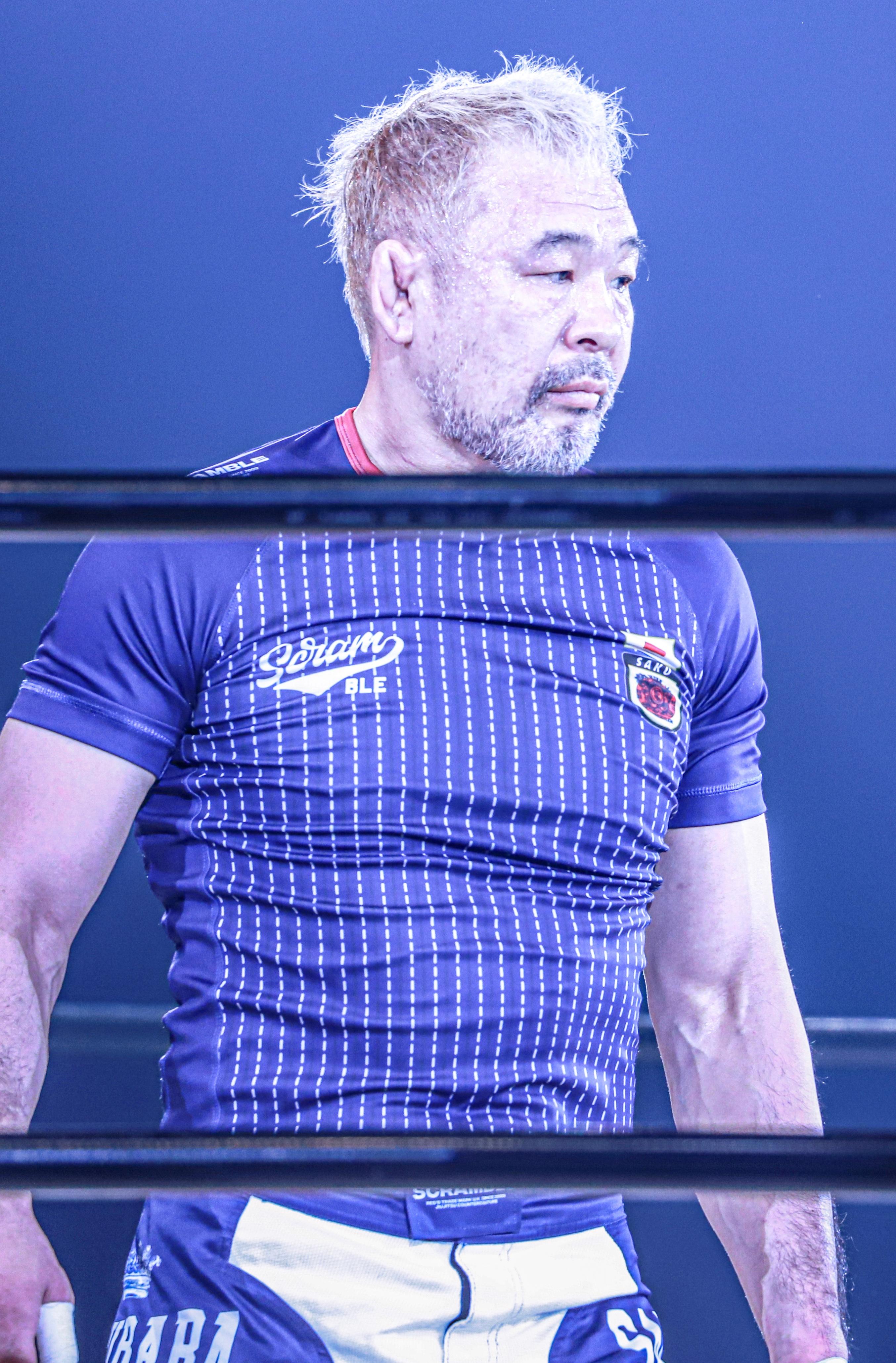
Kazushi Sakuraba
“Gracie Hunter”
Source: en.wikipedia.orgJapanese pro wrestler known as the Gracie Hunter, who won the UFC Japan heavyweight tournament in 1997 and later founded the grappling event Quintet.

Written by Bento, The BJJ Story’s AI editor
How Bento worksBiography
Akita, Chuo and UWF International
His road to the ring began with a Tiger Mask manga found in a local bookshop in junior high. By late in his second year there he wanted to be a professional wrestler, but a teacher talked him into finishing high school first. He chose Akita Commercial because its wrestling team had just placed second in the country, on the reasoning that pro wrestling is wrestling done by professionals. A recommendation took him to Chuo University in 1988, where, Wikipedia records, he wrestled freestyle and placed fourth at the All-Japan tournament as a senior. He then failed to graduate, two subjects short on credits, and used the repeat year to decide again to try pro wrestling. In 1992 a magazine ran a call for trainees at UWF International. He passed an entrance test built on hill sprints and hundreds of squats, left university and joined that July. The chores, he says, were harder than the training, and the quota was five bowls of rice a meal; he arrived at about 75 kilograms and was close to 88 or 89 by his debut. About a month in he became attendant to Nobuhiko Takada, cleaning the gym from around eight in the morning before training one-on-one with him ahead of joint practice. Wikipedia adds that his first grappling and striking instruction came from Yoji Anjo, and that he later worked on catch wrestling under Billy Robinson.Kingdom and UFC Japan
When UWF International disbanded at the end of 1996, the younger wrestlers moved to Kingdom, founded in January 1997. Grappling coaches came in, among them Enson Inoue and the amateur wrestler Takumi Adachi. Sakuraba found jiu-jitsu movement fun to practice, he says, because pro and amateur wrestlers never work from their backs. That December he entered the UFC Japan heavyweight tournament. His first-round match against Marcus Conan was ruled a no contest, and the two met again in the final, where the armbar came. In a taxi after the final, on the way from a party, Takada asked him and Adachi to join a new dojo he was setting up. Sakuraba talked it over with Adachi and said yes. Kingdom held its last show in January 1998.Pride and the Gracies
His first Gracie opponent was Royler, at Pride 8 on November 21, 1999. Sakuraba recalls weighing about 85 kilograms to Royler's 69. Royler lay down to invite him in, and Sakuraba stayed on his feet, throwing low kicks. With about five minutes left he went to the ground and had an armlock on when the referee stopped it. Wikipedia's account of the rivalry calls the result the Gracie family's first loss in decades and says Royce Gracie entered the Pride Grand Prix to answer it. Sakuraba and Royce met on May 1, 2000 at the Tokyo Dome, under rules the Gracie side had asked for: no judges, no referee stoppage and unlimited 15-minute rounds. To answer the Gracies' group entrance, he walked out in a SAKU Machine mask, his take on Super Strong Machine, with two teammates. His plan was to treat the gi as a tool, kicking low from the start and holding back early so Royce would tire. He even thought about pulling Royce's trousers down to pin him in place. The fight lasted 90 minutes and went into a sixth round. With an idea borrowed from Hurricane Bolt, a move in the manga Ring ni Kakero, he got the crowd cheering, and then the Gracie corner threw in the towel. What he felt, he says, was relief. He had said before the tournament that he would skip the semi-final, then insisted on facing Igor Vovchanchyn anyway. His reason, offered as a joke, was that showing up when nobody expects it is more fun. At Pride 10, Wikipedia says, he submitted Renzo Gracie with a kimura, and afterward Renzo took the microphone and described Sakuraba as a Japanese counterpart to his own family.Metamoris, Rizin and Quintet
Wikipedia records two grappling draws: against Renzo Gracie at Metamoris V on November 22, 2014, and with Frank Shamrock in a Rizin exhibition in October 2017. Sakuraba says the Metamoris match in Los Angeles got the crowd excited and set him lobbying for a grappling event. He had been allowed to set the rules against Shamrock, and Shamrock defended so tightly that it gave him the idea of penalizing stalling. The Japanese Wikipedia, which lists him as a special adviser to the Japan Brazilian Jiu-Jitsu Federation, says he held Quintet 1 at Ryogoku Kokugikan on April 11, 2018 with the federation's cooperation, as both producer and competitor. Teams fight in a winner-stays-on format, which he says he took from rules long used in judo and kendo, and referees penalize stalling. In June 2026 he spoke as Quintet's founder about Quintet 6 at the Kyoto Butokuden, the first Quintet event in Japan in about three years, and said he wants grappling to build a base the way baseball and football have. By his own account he is not much of a teacher. He trains alongside younger fighters, gives advice while sparring, plans to keep training until about sixty, and would fight again if asked.Sources & references (20)
Tokyo Sports Web, first-person serial of Sakuraba's career told to the paper, installment 1, 2 June 2026.(opens in a new tab)
In a first-person serial he says he was born in 1969 in Shōwa, Akita, a town now part of Katagami.
Where in the source: 1969年に秋田県南秋田郡昭和町
Accessed:
He says he discovered the first Tiger Mask (Satoru Sayama) through a manga in a local bookshop in his first year of junior high, then saw him on late-night television in Akita, and by late in his second year wanted to become a professional wrestler.
Where in the source: タイガーマスクのマンガ本があった
Accessed:
Tokyo Sports Web, first-person serial of Sakuraba's career told to the paper, installment 2, 3 June 2026.(opens in a new tab)
He says that when he told his junior-high teacher in early 1985 that he wanted to be a pro wrestler, he was talked into finishing high school first, and chose Akita Commercial High School because its wrestling team had just taken second place nationally, reasoning that pro wrestling is professional wrestling.
Where in the source: 秋田商業に行くことにしました
Accessed:
He describes his own high-school results as roughly top eight individually, jokingly preferring to call himself unbeaten in the Tohoku region, and says the school team also finished second and he entered Chuo University on a recommendation.
Where in the source: 東北無敗
Accessed:
Tokyo Sports Web, first-person serial of Sakuraba's career told to the paper, installment 3, 4 June 2026.(opens in a new tab)
He says he entered Chuo University in April 1988, accepted a job offer as a gym instructor in his final year, failed to graduate for lack of credits in two subjects, and used the repeat year to decide again to try to become a pro wrestler.
Where in the source: 2教科分の単位が足りず
Accessed:
Tokyo Sports Web, first-person serial of Sakuraba's career told to the paper, installment 4, 5 June 2026.(opens in a new tab)
He says that in 1992 he applied to UWF International after a magazine ran a call for trainees, passed an entrance test of hill sprints, hundreds of squats, push-ups, sit-ups and a rope-touch sumo bout, and left university to join.
Where in the source: 入団テスト
Accessed:
Tokyo Sports Web, first-person serial of Sakuraba's career told to the paper, installment 5, 9 June 2026.(opens in a new tab)
He says he joined UWF International in July 1992, that the chores of a trainee were harder than the training, that cooking for the dojo and a quota of five bowls of rice a meal went with it, and that he arrived at about 75 kilograms and was near 88 or 89 by his debut.
Where in the source: 1992年7月に晴れてUWFインターに入門
Accessed:
Tokyo Sports Web, first-person serial of Sakuraba's career told to the paper, installment 6, 10 June 2026.(opens in a new tab)
He says that about a month after joining he became attendant to Nobuhiko Takada, reached the gym around eight in the morning to clean, and then trained one-on-one with Takada before the joint practice that began at eleven.
Where in the source: 付け人になった
Accessed:
Tokyo Sports Web, first-person serial of Sakuraba's career told to the paper, installment 7, 11 June 2026.(opens in a new tab)
He says he made his pro debut on 13 August 1993 at the Nippon Budokan against Steve Nelson, remembers almost nothing of the match, and began using the scorpion deathlock about half a year later because it followed naturally from a takedown.
Where in the source: スティーブ・ネルソン
Accessed:
Tokyo Sports Web, first-person serial of Sakuraba's career told to the paper, installment 10, 17 June 2026.(opens in a new tab)
He says the younger UWF International wrestlers were told that the group was disbanding at the end of 1996 and went on to the new Kingdom group, founded in January 1997, where fights used open-finger gloves.
Where in the source: 1997年1月に旗揚げされたのが「キングダム」
Accessed:
He says that grappling coaches including Enson Inoue and the amateur wrestler Takumi Adachi came to Kingdom, that the wrestlers improved quickly, and that he found jiu-jitsu movement fun to practise because lying on one's back is never done in pro or amateur wrestling.
Where in the source: 柔術の動きは今までにない動き
Accessed:
Tokyo Sports Web, first-person serial of Sakuraba's career told to the paper, installment 13, 23 June 2026.(opens in a new tab)
He says that on 21 December 1997 he entered the UFC Japan heavyweight tournament, that his first-round match against Marcus Conan was ruled a no-contest, and that he won the rematch final by armbar in 3:44 of the first round.
Where in the source: 腕十字固めで勝利できました
Accessed:
After the UFC Japan final he shouted that pro wrestlers are really strong, and he says he had not planned the words but meant that wrestlers who train properly are strong.
Where in the source: 「プロレスラーは本当は強いんです!」
Accessed:
He says Kingdom held its last show in January 1998, and that after the UFC Japan final, on the way from a year-end or New Year party he cannot place, Takada invited him and Adachi in a taxi to join a new dojo, which he accepted after consulting Adachi.
Where in the source: 新しい道場をつくるから来ないか
Accessed:
Tokyo Sports Web, first-person serial of Sakuraba's career told to the paper, installment 15, 25 June 2026.(opens in a new tab)
He says that he beat Carlos Newton at Pride 3 in June 1998 with a kneebar in round two after noting Newton's elbow cracked in an armbar without a tap, and that he drew with Allan Goes at Pride 4 in October 1998 and cried after the fight.
Where in the source: ヒザ十字で決めた
Accessed:
He says Dana White told him that his 2017 UFC Hall of Fame induction rested on submitting several men who became UFC champions, even though he fought only once in a UFC-branded event, which was in Japan.
Where in the source: ダナ・ホワイト
Accessed:
Tokyo Sports Web, first-person serial of Sakuraba's career told to the paper, installment 17, 30 June 2026.(opens in a new tab)
He says that on 21 November 1999 at Pride 8 he faced Royler Gracie, his first Gracie opponent, at about 85 kilograms against 69, that Royler lay down to invite him in while he stood over him throwing low kicks, and that with about five minutes left he went to the ground and secured an armlock before the referee stopped it.
Where in the source: ホイラー・グレイシー
Accessed:
Tokyo Sports Web, first-person serial of Sakuraba's career told to the paper, installment 19, 2 July 2026.(opens in a new tab)
He says that for the Royce Gracie match at Pride Grand Prix 2000 he entered in a 'SAKU Machine' mask, his take on Super Strong Machine, with two teammates to answer the Gracie family's group entrance, after asking New Japan Pro-Wrestling for permission, and that Antonio Inoki handed over a bouquet.
Where in the source: SAKUマシンのマスクで入場
Accessed:
He says he planned to use the gi as a tool, kicking low from the start and holding back early so that the gi-clad opponent would tire, and that he thought of pulling Gracie's trousers down to immobilise him.
Where in the source: 〝道着は使えるな〟
Accessed:
Tokyo Sports Web, first-person serial of Sakuraba's career told to the paper, installment 20, 3 July 2026.(opens in a new tab)
He says the Royce Gracie match ran into a sixth round, that with an idea taken from the manga move "Hurricane Bolt" in Ring ni Kakero he got the crowd cheering, and that the Gracie corner then threw in the towel, which he felt as relief.
Where in the source: ハリケーンボルト
Accessed:
He says he had said before the tournament he would withdraw from the semi-final, and then insisted on fighting Igor Vovchanchyn anyway, telling Takada he would say himself if he could not continue; his joking reason was that entering when nobody expects it is more fun.
Where in the source: 出た方がおいしい
Accessed:
Wikipedia (English), article on Kazushi Sakuraba, read 12 November 2026.(opens in a new tab)
The article describes him as a Japanese professional wrestler, submission wrestler and former mixed martial artist known as the Gracie Hunter after wins over four members of the Gracie family: Royler, Renzo, Ryan and Royce.
Where in the source: known as the Gracie Hunter
Accessed:
The article states that Japanese sports media gave him the nickname Gracie Hunter after the 2000 Pride Grand Prix, and the nickname is attached to his run of wins over Gracie family members.
Where in the source: Gracie Hunter
Accessed:
The article says he wrestled freestyle for Chuo University, won the East Japan freshman championship in his first year and placed fourth in the All-Japan tournament in his senior year.
Where in the source: East Japan Freshman
Accessed:
The article says that in UWF International he received initial grappling and striking instruction from Yoji Anjo and later worked on catch wrestling under Billy Robinson, and that he became one of Takada's four main trainees.
Where in the source: tutelage of Billy Robinson
Accessed:
The article lists him as a UFC Hall of Fame inductee in the Pioneer wing, class of 2017.
Where in the source: Pioneer wing, Class of 2017
Accessed:
The article says he joined New Japan Pro-Wrestling in August 2012 as a free agent, teaming with Katsuyori Shibata as Laughter7, and later won the GHC Tag Team Championship in Pro Wrestling Noah with Takashi Sugiura in August 2020.
Where in the source: Laughter7
Accessed:
The article describes a grappling match against Renzo Gracie at Metamoris V on 22 November 2014 that ended in a draw, and a grappling exhibition draw with Frank Shamrock at a Rizin event in October 2017.
Where in the source: Metamoris
Accessed:
The article says that after the Pride 10 bout, in which he submitted Renzo Gracie with a kimura that broke the arm before the referee stopped the fight, Renzo described him on the microphone as a Japanese counterpart to his own family, and the card drew about 35,000 fans.
Where in the source: Seibu Dome
Accessed:
Wikipedia (Japanese), article on Sakuraba Kazushi, read 12 November 2026.(opens in a new tab)
The Japanese article describes him as a special adviser to the Japan Brazilian Jiu-Jitsu Federation and says he founded the grappling event Quintet in 2018, running it through the company Rubber Land.
Where in the source: 日本ブラジリアン柔術連盟スペシャルアドバイザー
Accessed:
The Japanese article says he announced a grappling event concept on 1 February 2018, with cooperation from the Japan Brazilian Jiu-Jitsu Federation, and held Quintet 1 at Ryogoku Kokugikan on 11 April 2018 as producer and competitor.
Where in the source: 2018年4月11日、両国国技館
Accessed:
Wikipedia (English), article on the Sakuraba versus Royce Gracie fight, read 12 November 2026.(opens in a new tab)
The article says the Royce Gracie match at Pride on 1 May 2000 in the Tokyo Dome ran 90 minutes under rules the Gracie side requested, with no judges, no referee stoppage and unlimited 15-minute rounds, and ended in a sixth-round stoppage in his favour.
Where in the source: Tokyo Dome
Accessed:
The article says the rivalry began at Pride 8, when his Kimura win over Royler Gracie was the first loss for the Gracie family in decades, and that Royce entered the Pride Grand Prix to answer it.
Where in the source: Pride 8
Accessed:
Tokyo Sports Web, first-person serial of Sakuraba's career told to the paper, final installment, 2026.(opens in a new tab)
He says Quintet grew from a grappling match at Metamoris 5 in Los Angeles in November 2014 that excited the crowd, that he lobbied for a grappling event, and that he drew the winner-stays-on team format from rules long used in judo and kendo.
Where in the source: 「Metamoris5」
Accessed:
He says he is not good at teaching but trains alongside younger fighters and gives advice while sparring, and that he plans to keep training until about sixty and would fight again if offered.
Where in the source: 僕は人に教えるのがあまり得意ではない
Accessed:
Tokyo Sports Web, first-person serial of Sakuraba's career told to the paper, installment 41, 2026.(opens in a new tab)
He says that in his October 2017 Rizin grappling match with Frank Shamrock, whose rules he had been allowed to set, Shamrock defended very tightly, and that this gave him the idea of using penalties for stalling in Quintet.
Where in the source: 指導
Accessed:
Number Web, feature on the launch of Quintet, 13 August 2018 (public opening lines only).(opens in a new tab)
The opening of the article says Quintet was a grappling tournament launched in April 2018 with Sakuraba as producer, and that referees penalising stalling was meant to dispel the image of grappling as stalling.
Where in the source: 今年4月に旗揚げ
Accessed:
Tokyo Sports Web, report on Quintet 6 and the amateur Quintet, 21 June 2026.(opens in a new tab)
In June 2026 he spoke as founder of Quintet about Quintet 6 at the Kyoto Butokuden on 25 July, the first event in Japan in about three years, and about an amateur Quintet in Yokohama in July, saying he wants grappling to build a base like baseball and football.
Where in the source: ファウンダー
Accessed:
Lineage
No teaching connections are shown on this page.
Open lineage