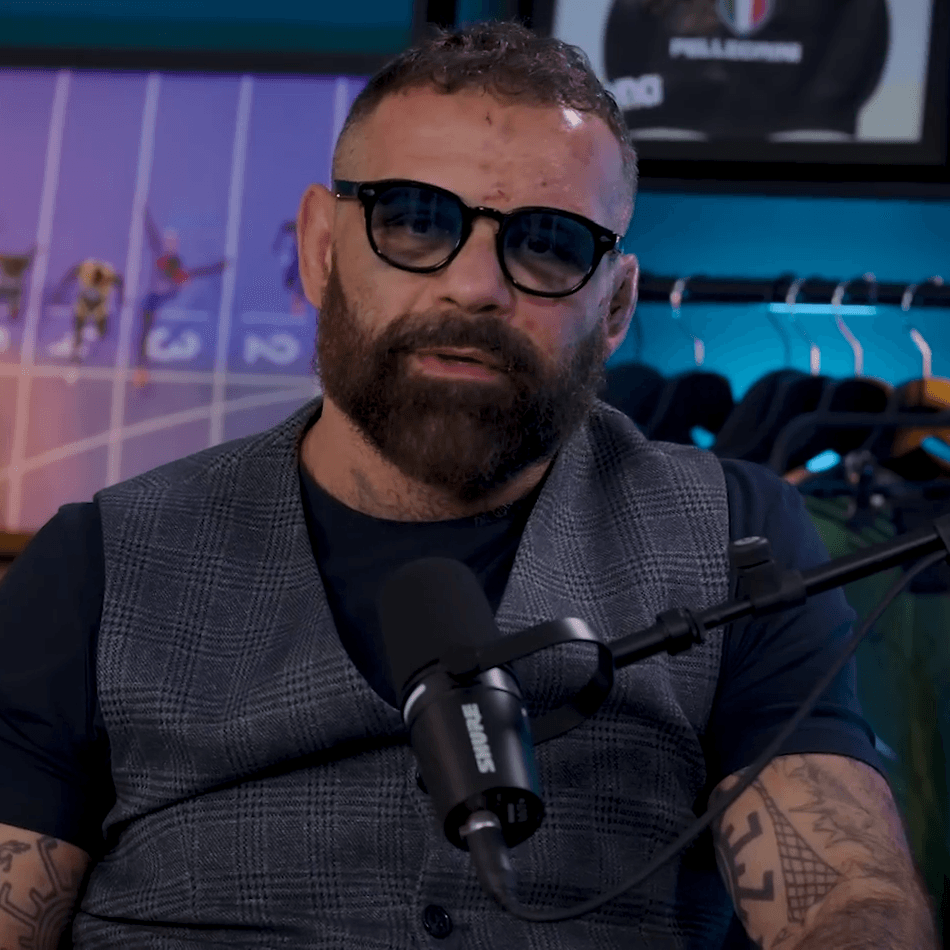
Creator credit recorded on the linked source page: La Gazzetta dello Sport · CC BY 4.0
Alessio Sakara
“Legionarius”
Source: ufc.comItalian UFC pioneer who brought boxing and Brazilian grappling experience to seminars and instructor training.
Biography
Sources for this profile
UFC, athlete record.(opens in a new tab)
The UFC identifies Alessio Sakara by the nickname Legionarius.
Where in the source: Athlete header.
Accessed:
BKFC, athlete registration.(opens in a new tab)
BKFC lists Sakara’s nationality as Italy.
Where in the source: Nationality field.
Accessed:
Witty TV, biographical profile.(opens in a new tab)
Sakara was born in Rome on 2 September 1981.
Where in the source: Opening biographical paragraph.
Accessed:
He grew up in Pomezia, played football as a child and began boxing at eleven.
Where in the source: Childhood paragraph.
Accessed:
After returning from boxing in Colombia, he met Brazilian jiu-jitsu teacher Roberto Almeida in Italy; Almeida advised training in Brazil, where Sakara worked with the Nogueira brothers.
Where in the source: Colombia and first jiu-jitsu teacher paragraph.
Accessed:
From September 2017 he joined the presenting team of Tú Sí Que Vales.
Where in the source: Final biographical paragraph.
Accessed:
Paolo Merenda, Sakara interview, 27 January 2012.(opens in a new tab)
Sakara credited his first boxing teacher, Silvano, with teaching discipline, respect and sacrifice as well as boxing.
Where in the source: First interview answer.
Accessed:
The interview identifies him as the first Italian to enter the UFC, in 2005.
Where in the source: Introductory identity paragraph.
Accessed:
In 2012 he described courses and the Legionarivs League as ways to develop MMA in Italy, and hoped to establish an academy for younger practitioners.
Where in the source: Final answer on future plans.
Accessed:
MMA Mania, Jesse Holland interview, 18 August 2007.(opens in a new tab)
He recalled choosing MMA after watching a UFC videotape with his uncle; the limited prospects of Italian boxing also shaped that choice.
Where in the source: Answer comparing MMA with boxing.
Accessed:
In August 2007 he described himself as a brown belt after four years of training in Brazil, while preferring striking and practising all the components of MMA.
Where in the source: Answer on jiu-jitsu and Alexander.
Accessed:
UFC, Martins Denis interview, 11 November 2010.(opens in a new tab)
By November 2010, the UFC reported that Marcus Conan Silveira had awarded Sakara a Brazilian jiu-jitsu black belt.
Where in the source: Belt and training section.
Accessed:
Sakara said he spent five years in Rio training with the Nogueira brothers, Ricardo de la Riva and Paulo Caruso, then continued his training in Miami from 2007.
Where in the source: Answer on Brazilian training and Miami.
Accessed:
His father’s death and a training injury interrupted his 2010 plans; he described wanting to compete in his father’s memory.
Where in the source: Family loss and interrupted preparation section.
Accessed:
UFC, Thomas Gerbasi interview, 12 April 2012.(opens in a new tab)
Injuries had restricted his appearances from 2008 through 2011; he said continued training and support from family, friends and fans sustained him.
Where in the source: Career interruptions and support answers.
Accessed:
In 2012 he described teaching weekend seminars around Italy to improve MMA instruction, alongside charity activities intended to explain the sport to a wider public.
Where in the source: Closing answers on public understanding and seminars.
Accessed:
UFC, Stann–Sakara preview, 2012.(opens in a new tab)
He debuted in the UFC against Ron Faircloth in 2005, later built successive wins over Joe Vedepo, Thales Leites and James Irvin, and then lost a decision to Chris Weidman in 2011.
Where in the source: Career review before the matchup analysis.
Accessed:
Il Giunco, Lorenzo Falconi, 2 March 2015.(opens in a new tab)
At a three-hour Extrema Fighting Club seminar in Follonica’s Palagolfo, Sakara taught striking, standing wrestling and ground jiu-jitsu to athletes from across Italy. Organiser Paolo Andreini assisted him and said this was their second invitation.
Where in the source: Three main article paragraphs.
Accessed:
La Gazzetta dello Sport, Giulio Di Feo interview, 6 May 2020.(opens in a new tab)
Sakara recalled exchanging boxing instruction for grappling practice with Antônio Rodrigo Nogueira in Brazil, and credited him with humility and sustained training.
Where in the source: Brazil and influential training partners answers.
Accessed:
He stressed reliance on training partners and encouraged pupils to complement Italian training with foreign camps offering unfamiliar skills and opponents.
Where in the source: Answers on teamwork and training abroad.
Accessed:
ROI Edizioni, published Sakara memoir extract, 2020.(opens in a new tab)
In his memoir, Sakara recalled fear of another knockout after losing to Kent Kauppinen, with Conan Silveira supervising his later warm-up; he connected courage to preparation, action and reading Stoic authors.
Where in the source: Kauppinen recollection through the preparation discussion.
Accessed:
OPES, training report, 18 December 2019.(opens in a new tab)
On 18 December 2019 Sakara taught future project staff at CONI about motivation, practical goals and perseverance, preparing them for an OPES initiative serving people vulnerable to social exclusion.
Where in the source: Completed course report and explanation of beneficiaries.
Accessed:
LEGIO, official project biography, accessed October 2026.(opens in a new tab)
His official project biography dates LEGIO TEAM to 2007 and describes training for both practitioners and instructors.
Where in the source: Project origins and biography.
Accessed:
LEGIO, teaching method, accessed October 2026.(opens in a new tab)
LEGIO describes lessons progressing through preparation, technical study, applied exercises, work under fatigue and a calmer discussion connecting conduct with everyday commitments.
Where in the source: Five-part lesson structure.
Accessed:
LEGIO, instructor pathways, accessed October 2026.(opens in a new tab)
LEGIO’s instructor pathways distinguish MMA, striking, no-gi grappling and physical preparation; technical assessment and authorisation precede opening a branded team.
Where in the source: Specialist pathways and authorisation sections.
Accessed:
Legios Academy, course overview, accessed October 2026.(opens in a new tab)
His online academy advertises lessons covering striking, wrestling, grappling and Brazilian jiu-jitsu, alongside conditioning and mental preparation, with links to in-person instructors.
Where in the source: Course overview and network explanation.
Accessed:
ROI Edizioni, author profile.(opens in a new tab)
His publisher describes LEGIO teams training younger athletes and a school anti-bullying initiative, and lists his books and work in television and film.
Where in the source: Author biography.
Accessed:
ROI Edizioni, book catalogue, 6 May 2020.(opens in a new tab)
ROI published his book Ogni giorno in battaglia in May 2020.
Where in the source: Bibliographic details.
Accessed:
BKFC, event report, 25 October 2025.(opens in a new tab)
On 25 October 2025 in Rome he defeated Chris Camozzi by split decision to win BKFC’s cruiserweight championship.
Where in the source: Main-event narrative and result list.
Accessed:
Lineage
No teaching connections are shown on this page.
Open lineage